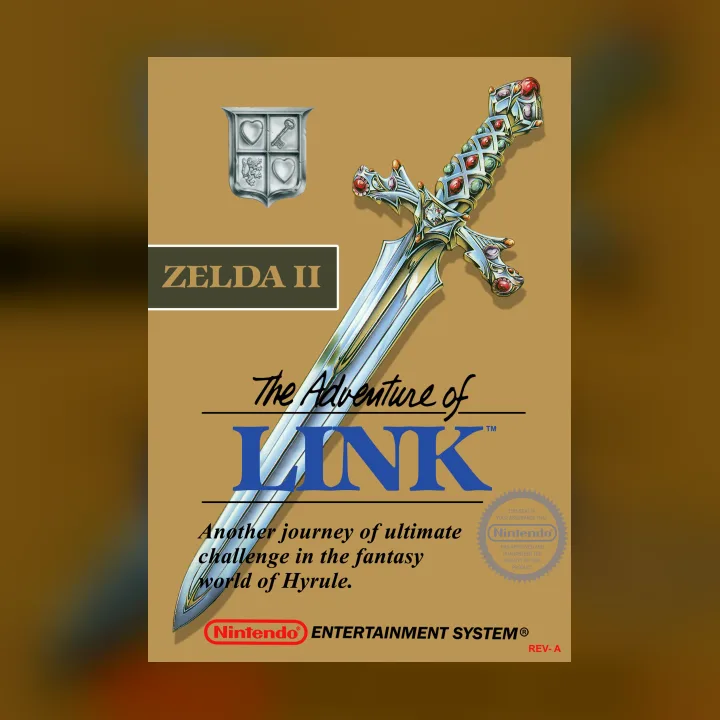
Zelda II: The Adventure of Link
1988 · Nintendo · Action, Platform, Role-Playing · 1 player
Nintendo NES
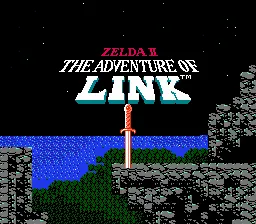
Link is 16, Princess Zelda lies under a sleeping spell, and only the Triforce of Courage can wake her. Nintendo’s 1987 sequel swapped the top-down view for side-scrolling swordplay, experience levels and magic – and introduced Dark Link.
The 1988 Nintendo NES game, free to play in your browser.
Runs in your browser, fullscreen. Keyboard, gamepad and touch controls. Your progress is saved on this device.
About Zelda II: The Adventure of Link
A sleeping princess and six palaces
Link, now 16, notices a mark on the back of his hand that matches the crest of Hyrule. Impa leads him to the North Castle, where a sealed door opens at his touch to reveal Zelda, asleep under an old magic spell. To break it, Link needs the Triforce of Courage, hidden deep inside the Great Palace.
The way in is closed until six crystals are placed in the statues of six palaces scattered across the land. Meanwhile Ganon’s followers are hunting Link, because his blood sprinkled on Ganon’s ashes would bring their master back. At the end of the Great Palace wait the Thunderbird and, finally, Link’s own shadow.
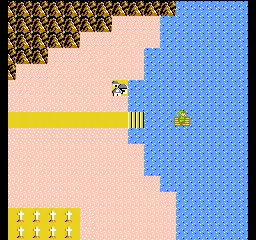
Overworld map, side-scrolling fights
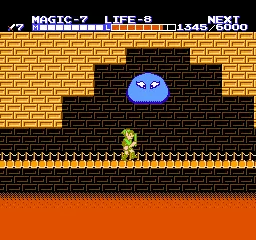
Zelda II plays differently from every other game in the series. Travel happens on a top-down map, but entering a town, a cave, a palace or touching a wandering monster switches to a side view where Link jumps, stabs high and low, and blocks with his shield. Later he learns a downward thrust and an upward thrust that make many fights easier.
Defeating enemies earns experience, which you spend on three stats: Attack makes the sword hit harder, Magic lowers the cost of spells and Life reduces damage taken. Each can reach level eight. Link also has a stock of lives, with 1-Up dolls to find – the only Zelda game that uses lives at all.
Eight spells from eight towns
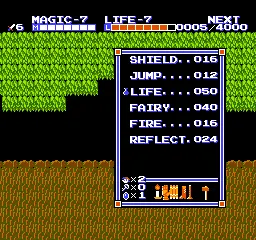
The towns are where Link learns magic. A wise man in each one teaches a spell, usually after a small favour: the Life spell in Saria is earned by returning a lost mirror, and the Fairy spell in Mido by bringing the Water of Life to a sick child. The full set is Shield, Jump, Life, Fairy, Fire, Reflect, Spell and Thunder.
Several spells are required rather than optional. Fire is the only way to hurt certain enemies, Reflect lets the shield turn back wizards’ magic, and Thunder exposes the Thunderbird’s weak spot. Life is the main way to heal during action scenes, so keep enough magic in reserve before every boss door.
From Famicom Disk to NES cartridge
Shigeru Miyamoto produced the game, Tadashi Sugiyama and Yasuhisa Yamamura directed it, Takashi Tezuka wrote the story and Akito Nakatsuka composed the music. It came out in Japan on 14 January 1987 for the Famicom Disk System. The NES cartridge reached Europe on 26 September 1988 and North America on 1 December 1988, after a ROM chip shortage delayed it.
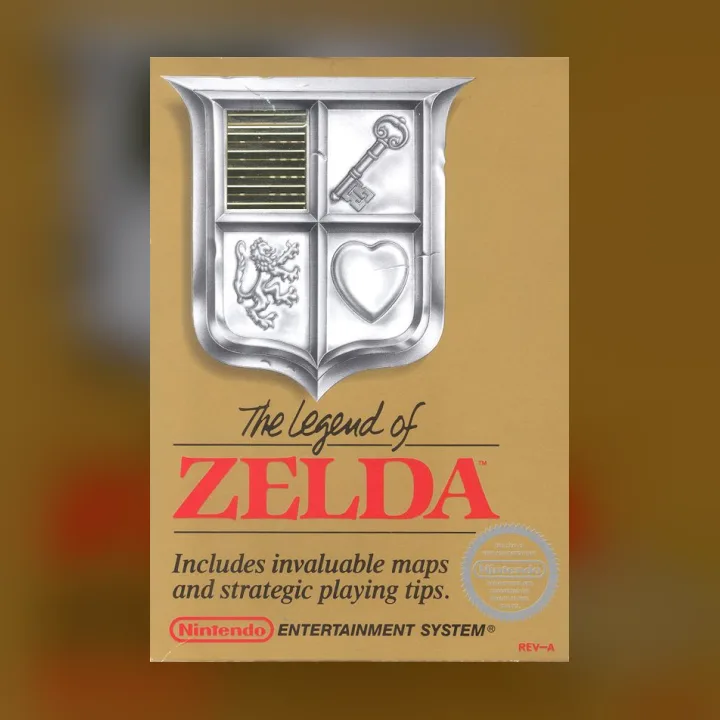
The cartridge differs in places: each palace got its own colour, some music was lost because the NES lacks the disk system’s extra sound channel, and the levels you gain are kept after a game over. This page runs the revised European NES cartridge, and the first The Legend of Zelda is on this site too.
Error, Bagu and a lasting legacy
In the town of Ruto a man says “I am Error.” It is a faithful translation of his Japanese line, not a glitch. The joke is thought to come from a programmer: a lookalike living south of Ruto is named Bagu, Japanese for a software bug, but only Error’s name was translated.
Nintendo Power named Zelda II its game of the year for 1988, and the game sold 4.38 million copies. Dark Link, the Triforce of Courage and a magic meter all returned in later entries, and town names such as Rauru, Saria and Darunia reappeared as sages in Ocarina of Time.
Sources: en.wikipedia.org, zeldawiki.wiki, legendsoflocalization.com
Screenshots
Game details
- Platform
- Nintendo NES
- Released
- 1988
- Developer
- Nintendo R&D4
- Publisher
- Nintendo
- Genre
- Action, Platform, Role-Playing
- Players
- 1 player
- Japan release
- 14 January 1987 (Famicom Disk System)
- Europe release
- 26 September 1988 (NES)
- North America release
- 1 December 1988 (NES)
- Developer and publisher
- Nintendo
- Directors
- Tadashi Sugiyama and Yasuhisa Yamamura
- Producer
- Shigeru Miyamoto
- Composer
- Akito Nakatsuka
- Spells
- Eight, one taught in each town
- Sales
- 4.38 million copies
- Version on this page
- European NES cartridge (Rev 1)
- Emulator
- FCEUmm
How to play Zelda II: The Adventure of Link
Press Play: the game starts fullscreen in your browser, nothing to install. Press Esc or the ‹ Menu button to come back here; your progress is saved and you can continue next time.
Keyboard
| Arrow keys | Move |
|---|---|
| Z | A button |
| X | B button |
| Enter | Start |
| V | Select |
Gamepads (Xbox, PlayStation, Switch and most USB or Bluetooth pads) work as soon as you press a button; two pads give two players. On phones and tablets on-screen buttons appear. Keys can be changed in the emulator's Controls menu.
Zelda II: The Adventure of Link FAQ
Can I play Zelda II: The Adventure of Link online?
You can – the revised European NES cartridge boots straight in this browser tab, free, with nothing to install. Swing the sword and cast spells using a keyboard, a gamepad or the touch buttons, and the game’s save slots are kept on your device.
Which stat should I level up first in Zelda II?
There is no single right order: Attack makes fights shorter, Magic lets you cast more often and Life softens every hit. Each of the three stats can reach level eight.
What happens when you get a game over?
Link is sent back to the North Castle where the game began. In the NES version the levels you have earned stay with you.
What does “I am Error” mean?
It is simply the name of a man in Ruto. His lookalike is called Bagu, Japanese for “bug”, which is widely seen as a programmers’ joke.
Comments
No comments yet. Be the first!