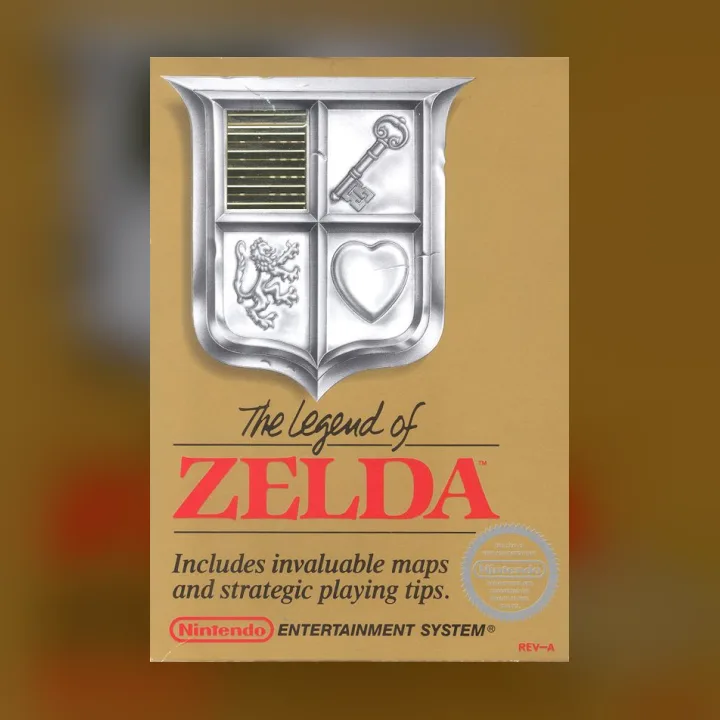
The Legend of Zelda
1986 · Nintendo · Action, Adventure · 1 player
Nintendo NES
An old man in a cave hands Link a sword, and the rest of Hyrule is yours to figure out. Nintendo’s 1986 open-world adventure, in its NES cartridge version with battery save, started one of gaming’s best-loved series.
The 1986 Nintendo NES game, free to play in your browser.
Runs in your browser, fullscreen. Keyboard, gamepad and touch controls. Your progress is saved on this device.
About The Legend of Zelda
Eight fragments of the Triforce of Wisdom
Ganon has seized the Triforce of Power. To keep the Triforce of Wisdom out of his hands, Princess Zelda splits it into eight fragments and hides them across the kingdom before she is captured. A young wanderer named Link sets out to recover all eight, reach Ganon’s lair and rescue her.
Each fragment is guarded at the end of a dungeon, which the game calls a Level. Once all eight are in hand, the ninth and final dungeon opens, where Ganon is waiting. He can only be finished off with the Silver Arrow, so the last dungeon also hides the key item you need.
A map with no signposts
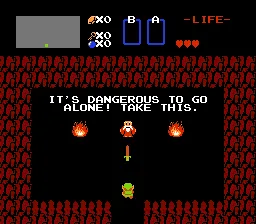
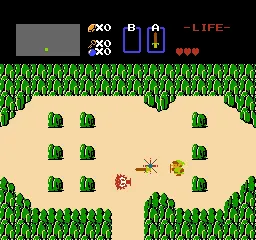
What made The Legend of Zelda unusual in 1986 was how little it told you. You start on a single screen with nothing but a small shield, and the first cave holds an old man and a sword – along with one of the most quoted lines in gaming. After that, the overworld is open: forests, lakes, a graveyard and Death Mountain, with secrets behind bushes you burn, walls you bomb and rocks you push.
Progress comes from equipment. The boomerang stuns enemies, bombs open cracked walls, the raft and ladder cross water, and the recorder can warp you to dungeons you have already cleared. Heart containers raise your health, rings reduce damage and rupees buy items in shops hidden in caves.
From Famicom Disk to the gold NES cartridge
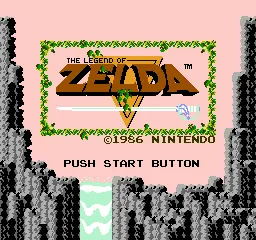
Shigeru Miyamoto and Takashi Tezuka directed and designed the game, with Tezuka writing the story and Koji Kondo composing the music. Kondo had originally planned to use Ravel’s Boléro for the title screen, but dropped the idea when it turned out the piece was still under copyright in Japan; he wrote a replacement in about a day.
It launched in Japan on 21 February 1986 as one of the first Famicom Disk System games, using rewritable disks to save. For North America (22 August 1987) and Europe (15 November 1987), Nintendo released it on a gold-coloured cartridge with a battery inside to keep save files – one of the first games to use one. The box had a window that showed off the gold plastic.
The NES version on this site has one small change from the Famicom original: the Japanese controller’s microphone, which could be used against the big-eared Pols Voice enemies, does not exist on the NES, so it is not used.
The Second Quest and the game’s legacy
Beating Ganon unlocks the Second Quest, a harder replay in which dungeons are rearranged, items are in new places and enemies are stronger. You can also start it straight away by entering ZELDA as your file name.
The game was a huge seller: in 1987 it became the first NES game to pass one million cartridges sold in the US, and it has sold about 6.5 million copies worldwide. Miyamoto has said the princess was named after Zelda Fitzgerald, the wife of author F. Scott Fitzgerald.
Starter tips
Get the sword from the first cave before doing anything else, then buy or find bombs early – many dungeon entrances and secret shops are behind walls you can blow open. Stronger swords are hidden in caves later on, and they make every fight easier, Ganon included.
Old men in caves give cryptic hints; write them down. Before tackling a dungeon, try to raise your heart count, and use the recorder to return to finished dungeons quickly.
Sources: en.wikipedia.org, zeldawiki.wiki, zeldadungeon.net
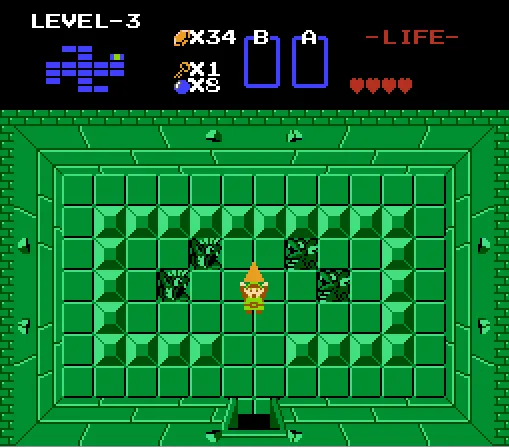
Screenshots
Game details
- Platform
- Nintendo NES
- Released
- 1986
- Developer
- Nintendo
- Publisher
- Nintendo
- Genre
- Action, Adventure
- Players
- 1 player
- Japan release
- 21 February 1986 (Famicom Disk System)
- North America release
- 22 August 1987 (NES)
- Europe release
- 15 November 1987 (NES)
- Directors
- Shigeru Miyamoto and Takashi Tezuka
- Composer
- Koji Kondo
- Cartridge
- Gold-coloured, with battery-backed save
- Dungeons
- Nine, eight of them holding Triforce fragments
- Sales
- About 6.5 million copies worldwide
- Emulator
- FCEUmm
How to play The Legend of Zelda
Press Play: the game starts fullscreen in your browser, nothing to install. Press Esc or the ‹ Menu button to come back here; your progress is saved and you can continue next time.
Keyboard
| Arrow keys | Move |
|---|---|
| Z | A button |
| X | B button |
| Enter | Start |
| V | Select |
Gamepads (Xbox, PlayStation, Switch and most USB or Bluetooth pads) work as soon as you press a button; two pads give two players. On phones and tablets on-screen buttons appear. Keys can be changed in the emulator's Controls menu.
The Legend of Zelda FAQ
Can I play The Legend of Zelda online for free?
Yes. The gold-cartridge NES version runs free inside your browser on this site. Explore Hyrule with a keyboard, gamepad or touch controls; the game’s save files are stored on this device.
How many dungeons are in The Legend of Zelda?
Nine. The first eight each hold a piece of the Triforce of Wisdom, and the ninth is Ganon’s lair.
How do you start the Second Quest?
Finish the first quest, or simply enter ZELDA as your name on a new save file.
How do you defeat Ganon?
Ganon turns invisible and teleports around the room. Strike him with your sword until he is stunned and changes colour, then hit him with the Silver Arrow, which is found in Level 9.
Who made The Legend of Zelda?
Nintendo, with Shigeru Miyamoto and Takashi Tezuka as directors and Koji Kondo as composer.
Comments
No comments yet. Be the first!