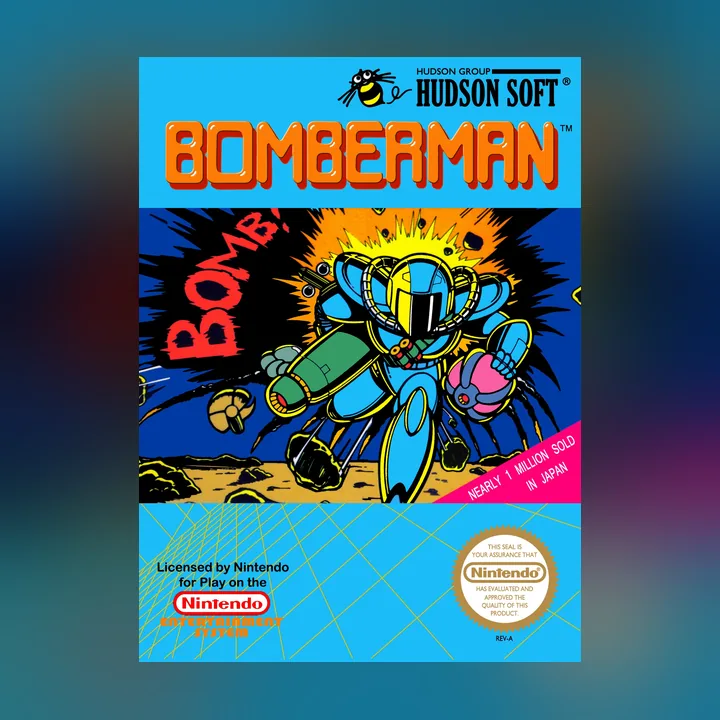
Bomber Man
1985 · Hudson Soft · Action, Puzzle · 1 player
Nintendo NES
Before the party multiplayer, Bomberman was a lone robot escaping an underground factory. Hudson Soft’s 1985 NES game packs 50 maze stages, eight enemy types and a twist ending that ties into Lode Runner.
The 1985 Nintendo NES game, free to play in your browser.
Runs in your browser, fullscreen. Keyboard, gamepad and touch controls. Your progress is saved on this device.
About Bomber Man
A robot on the run
The hero of this NES cartridge is not yet the cheerful mascot of later sequels. He is a bomb-making robot working in an underground complex, and the story has him break out, fight off the creatures sent after him and climb toward the surface, where he hopes to become human.
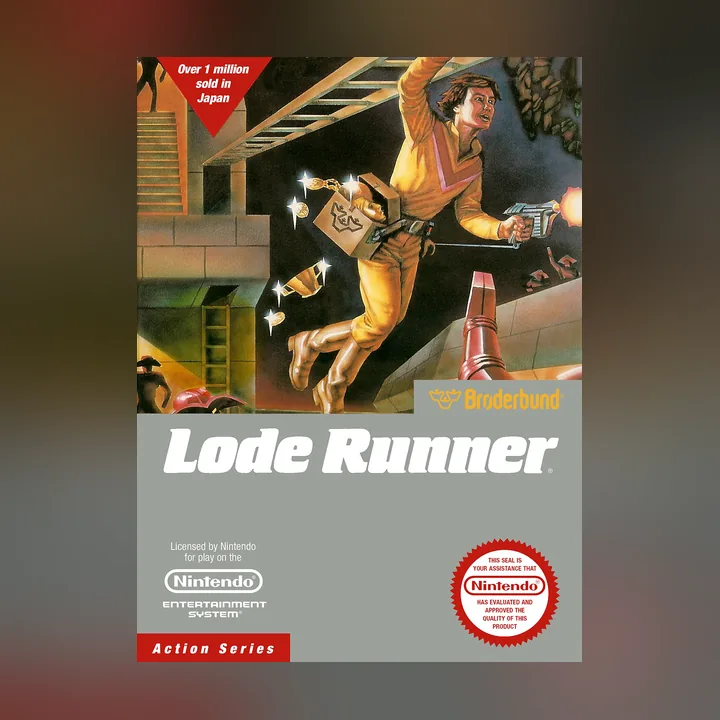
The ending gives the plot a neat twist: once Bomberman reaches daylight he turns into the human hero of Lode Runner, which Hudson Soft had already brought to the Famicom, which makes this game a kind of prequel to it. It is a small story, told almost entirely in the manual and the final screen, but it explains why the series started out as a solo game.
Bombs, soft blocks and a hidden exit
Every stage is a single screen-wide grid of indestructible pillars surrounded by breakable soft blocks. You press the A button to drop a bomb where you are standing; after a short fuse it explodes in a cross shape, clearing blocks and destroying any enemy caught in the flames. Stand in the blast yourself and you lose a life.
Somewhere under the soft blocks lies the exit door, and somewhere else a single power-up panel. The exit only opens after every enemy on the stage is gone, so the job is to clear the maze, find the door and leave before the timer runs out. Hitting the exit door or a power-up with a blast is a bad idea: it releases a fresh wave of enemies.
There are 50 stages in all, with eight types of enemy that become steadily nastier. Some drift slowly and predictably, while later ones move fast, chase you directly or float straight through the soft blocks.
Power-ups that stay and power-ups that don’t
Bomberman begins with one bomb at a time and a very short blast. Permanent upgrades raise the number of bombs you can place and the length of the flames, and they remain until the end of your game. Other items, such as the ability to walk through soft blocks or the remote detonator, only last until you lose a life.
The detonator changes the whole rhythm of play. With it, bombs no longer explode on their own; pressing the B button sets off the oldest bomb on the screen, letting you lay traps and trigger them exactly when an enemy steps in. Losing it to a careless death hurts, which is why the later stages reward slow, careful play.
From a BASIC demo to a series
Bomberman’s roots go back to a 1983 computer game, Bomber Man, which Hudson Soft released in Japan on machines such as the MSX and the PC-8801. The NES version, programmed by Shinichi Nakamoto with music by Jun Chikuma, was a full reworking with new graphics and many more stages.
It came out on the Famicom in Japan on 20 December 1985 and reached North America in January 1989. It is single-player only; the battle mode that made the name famous arrived in later games. Hudson said the cartridge sold close to a million copies by 1989, and it was later reissued on the Famicom Disk System and the Game Boy Advance.
Survival tips
Never place a bomb without knowing where you will hide. A pillar between you and the blast is the safest cover. Write down the password shown when you clear a stage – the NES game has no battery save, but here your browser keeps your progress on the device as well.
When the timer reaches zero, a swarm of fast enemies appears, so do not wander forever looking for the exit. Clear blocks systematically from one side of the maze to the other.
Sources: en.wikipedia.org, archive.org, strategywiki.org
Screenshots
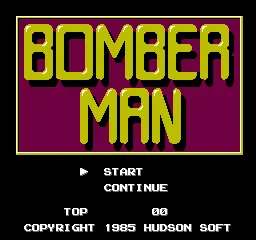
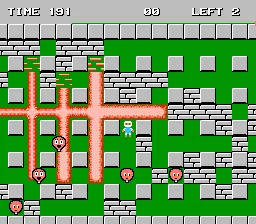
Game details
- Platform
- Nintendo NES
- Released
- 1985
- Developer
- Hudson Soft
- Publisher
- Hudson Soft
- Genre
- Action, Puzzle
- Players
- 1 player
- Japan release
- 20 December 1985 (Famicom)
- North America release
- January 1989 (NES)
- Programmer
- Shinichi Nakamoto
- Composer
- Jun Chikuma
- Stages
- 50
- Enemy types
- 8
- Saving
- Password system
- Origin
- Remake of Hudson Soft’s 1983 computer game Bomber Man
- Emulator
- FCEUmm
How to play Bomber Man
Press Play: the game starts fullscreen in your browser, nothing to install. Press Esc or the ‹ Menu button to come back here; your progress is saved and you can continue next time.
Keyboard
| Arrow keys | Move |
|---|---|
| Z | A button |
| X | B button |
| Enter | Start |
| V | Select |
Gamepads (Xbox, PlayStation, Switch and most USB or Bluetooth pads) work as soon as you press a button; two pads give two players. On phones and tablets on-screen buttons appear. Keys can be changed in the emulator's Controls menu.
Bomber Man FAQ
How many levels does NES Bomberman have?
There are 50 stages. Each one is cleared by defeating every enemy and then walking through the exit door hidden under a soft block.
Is the original NES Bomberman multiplayer?
No. The 1985 NES game is for one player only; the competitive battle mode the series is known for came later.
What is the connection between Bomberman and Lode Runner?
At the end of NES Bomberman the robot reaches the surface and becomes human, revealed as the hero of Hudson Soft’s Lode Runner. That makes Bomberman a prequel to it.
Can I play Bomberman online?
It can. Hudson Soft’s 1985 NES maze game loads straight in the browser on this site at no charge, and you can drop bombs from a keyboard, a gamepad or a touchscreen. Progress is saved on your device, so the password is only a backup.
Comments
No comments yet. Be the first!