Super Mario Bros. 2
1988 · Nintendo · Platform · 1 player
Nintendo NES
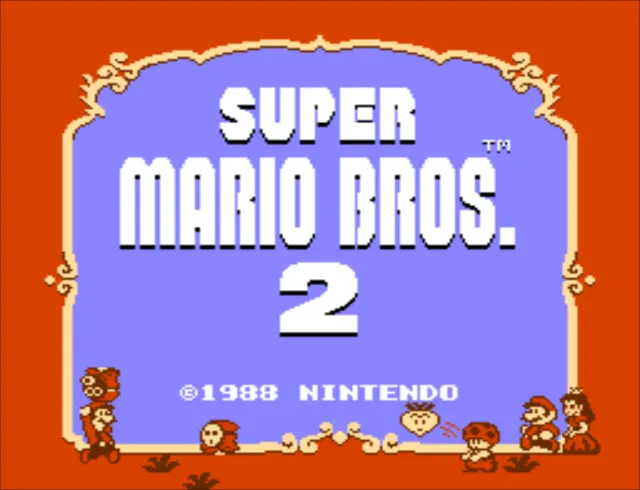
The western Super Mario Bros. 2 trades stomping for pulling up vegetables and throwing enemies. Built from the Famicom Disk System game Doki Doki Panic, it sends four playable heroes through the dream land of Subcon to topple Wart.
The 1988 Nintendo NES game, free to play in your browser.
Runs in your browser, fullscreen. Keyboard, gamepad and touch controls. Your progress is saved on this device.
About Super Mario Bros. 2
A dream about Subcon
This adventure takes place in Subcon, a land of dreams that has fallen under the control of Wart, a large frog who cannot stand vegetables. Mario, Luigi, Toad and the Princess set out across its seven worlds to free it. The ending has a twist that is now part of Mario history: the whole journey turns out to be a dream, and Mario wakes up in bed.
Subcon introduced several characters that later became Mario regulars, including Shy Guys, Bob-ombs, Pokeys and Birdo, the egg-spitting creature who guards the end of many levels.
Four heroes with different strengths
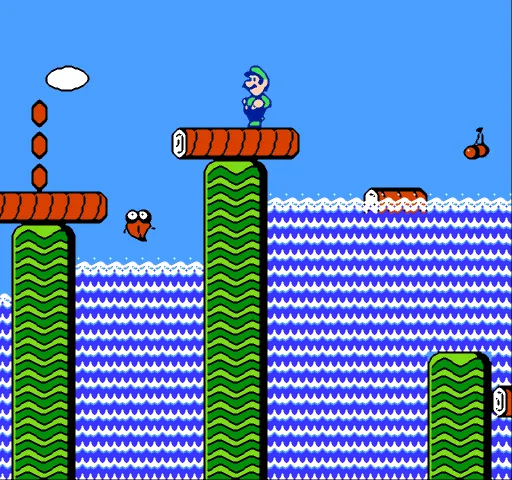
Before each level you pick one of four characters, and the choice really changes how a stage plays. Mario is the all-rounder. Luigi jumps the highest and flutters his legs in the air, but he is a little slower. Toad pulls up items and runs faster than anyone, at the cost of a weak jump. The Princess is the slowest and weakest at lifting, yet she can float for a moment at the top of her jump, which makes long gaps much easier.
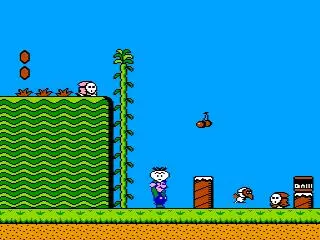
Jumping on enemies does not defeat them here. Instead, you land on them, pick them up with the B button and throw them, or pull vegetables out of the ground and hurl those. POW blocks shake the screen and clear most enemies, five cherries summon an invincibility star, and magic potions open a door into Subspace, a mirrored shadow world where coins and life-boosting mushrooms are hidden.
Why the American sequel is different
Japan already had its own Super Mario Bros. 2, a much harder follow-up to the first game. Nintendo of America felt it was too punishing for western players and asked for a more approachable sequel. Nintendo’s answer was to rework Yume Kōjō: Doki Doki Panic, a 1987 Famicom Disk System game made for a Fuji Television event, by swapping in Mario characters and adding new touches.
Kensuke Tanabe directed, Shigeru Miyamoto produced and Koji Kondo wrote the music. The result reached North America on 9 October 1988 and Europe in 1989. Japan eventually got it too, on 14 September 1992, under the name Super Mario USA. The Japanese original was later released in the west as Super Mario Bros.: The Lost Levels.
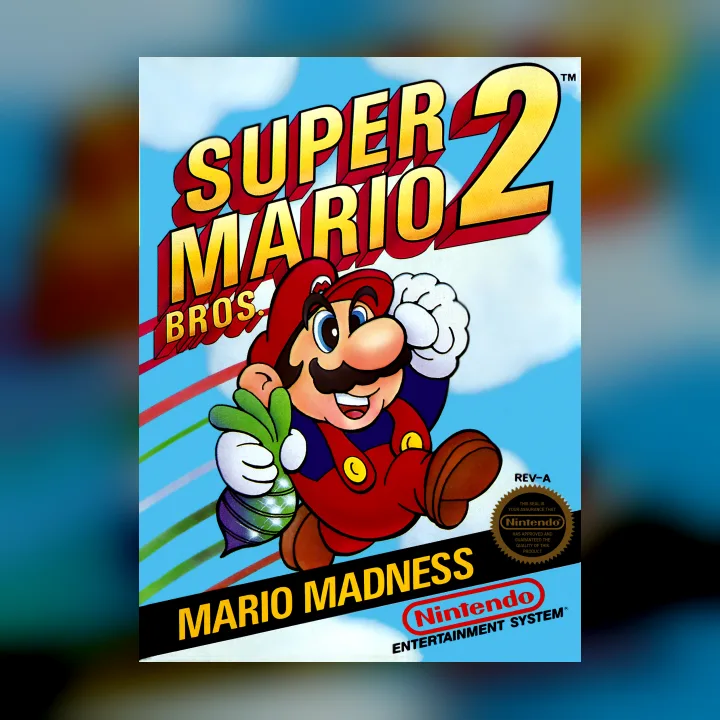
The cartridge on this page is the NES version described here – the Doki Doki Panic-based game with Wart as the villain, not the Japanese sequel.
Seven worlds and their bosses
The game has 20 levels: worlds 1 to 6 contain three levels each, and world 7 has two. Most first and second levels end with a fight against Birdo, who is beaten by catching the eggs it spits and throwing them back. The third level of each world has a bigger boss: Mouser the bomb-throwing mouse in worlds 1 and 3, the three-headed snake Tryclyde in worlds 2 and 6, Fryguy in world 4 and the crab Clawgrip in world 5.
Wart waits at the end of world 7-2. He cannot be hurt by ordinary attacks; you have to throw the vegetables produced by the Dream Machine into his mouth while it is open. Six hits finish him off.
Beginner tips
Choose the Princess for levels with wide gaps and Toad for stages with lots of digging or item pulling. Collect cherries whenever you can – a star makes any rough section easier.
Use potions where the ground is full of plants to pull: anything you uncover in Subspace, including mushrooms that add an extra health point, is a big help for the rest of the level.
Sources: en.wikipedia.org, mariowiki.com
Screenshots
Game details
- Platform
- Nintendo NES
- Released
- 1988
- Developer
- Nintendo
- Publisher
- Nintendo
- Genre
- Platform
- Players
- 1 player
- North America release
- 9 October 1988 (NES)
- Europe release
- 1989 (NES)
- Japan release
- 14 September 1992, as Super Mario USA
- Based on
- Yume Kōjō: Doki Doki Panic (Famicom Disk System, 1987)
- Director
- Kensuke Tanabe
- Producer
- Shigeru Miyamoto
- Composer
- Koji Kondo
- Structure
- 7 worlds, 20 levels
- Emulator
- FCEUmm
How to play Super Mario Bros. 2
Press Play: the game starts fullscreen in your browser, nothing to install. Press Esc or the ‹ Menu button to come back here; your progress is saved and you can continue next time.
Keyboard
| Arrow keys | Move |
|---|---|
| Z | A button |
| X | B button |
| Enter | Start |
| V | Select |
Gamepads (Xbox, PlayStation, Switch and most USB or Bluetooth pads) work as soon as you press a button; two pads give two players. On phones and tablets on-screen buttons appear. Keys can be changed in the emulator's Controls menu.
Super Mario Bros. 2 FAQ
Can I play Super Mario Bros. 2 online?
Yes – the American NES release, the one with Wart and the four playable heroes, runs free in your browser on this site. Pluck vegetables using a keyboard, a gamepad or touch, and your progress is saved on your device.
Who is the final boss of Super Mario Bros. 2?
Wart, the frog king of Subcon. You beat him by throwing vegetables from the Dream Machine into his open mouth six times.
How many worlds are in Super Mario Bros. 2?
Seven worlds with 20 levels in total: three levels in each of worlds 1–6 and two in world 7.
Why is Super Mario Bros. 2 so different from the first game?
The NES version is a reworked edition of the Japanese game Doki Doki Panic, made because Nintendo of America found the Japanese Super Mario Bros. 2 too difficult.
Which character is best in Super Mario Bros. 2?
It depends on the level: Luigi jumps highest, Toad is fastest and lifts quickest, and the Princess can float across gaps. Mario is the balanced choice.
Comments
No comments yet. Be the first!