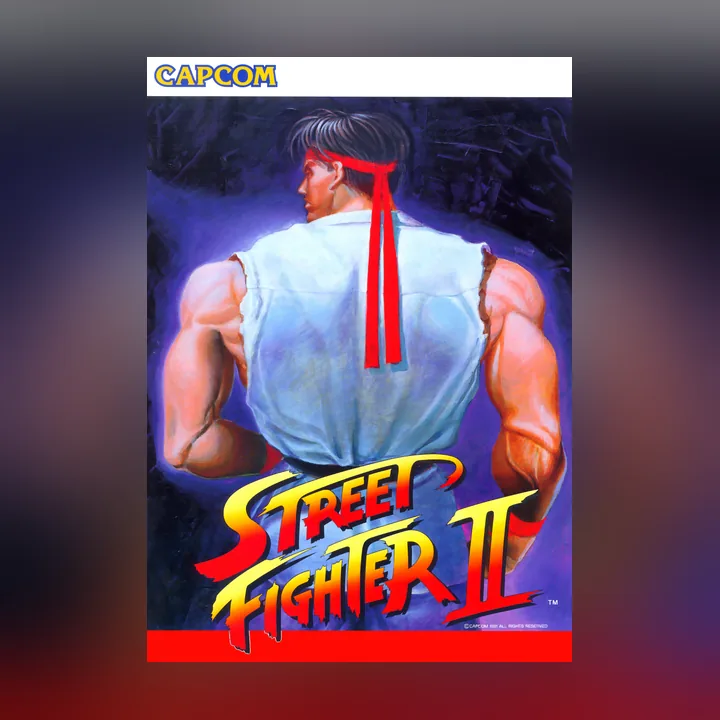
Street Fighter II
1991 · Capcom · Fighting · 1–2 players
ArcadeNintendo SNES
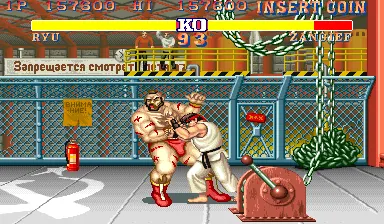
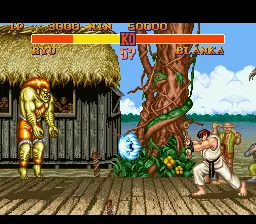
Eight world warriors, four bosses and a six-button control scheme that defined the one-on-one fighting game. This page has both Capcom’s 1991 arcade original and its 1992 Super Nintendo conversion.
The original 1991 Arcade game and the 1992 Nintendo SNES version, free to play in your browser.
Runs in your browser, fullscreen. Keyboard, gamepad and touch controls. Your progress is saved on this device.
About Street Fighter II
Eight fighters, four bosses
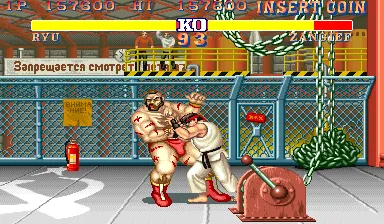
Street Fighter II: The World Warrior gives you a choice of eight characters, each with their own country, stage and set of special moves: Ryu and Ken, the sumo wrestler E. Honda, Blanka, the US airman Guile, Chun-Li, the Russian wrestler Zangief and the yoga master Dhalsim. After beating the other seven, you face four computer-controlled bosses that cannot be selected in this first edition.
In the western releases those bosses are Balrog, Vega, Sagat and finally M. Bison. Japanese players know three of them by other names: there the boxer is called M. Bison, the claw-wielding fighter is Balrog and the dictator is Vega. Capcom rotated the names for the overseas versions because the boxer was partly modelled on Mike Tyson and the company feared a likeness lawsuit.
Six buttons, special moves and accidental combos
Each fighter has three punches and three kicks of light, medium and heavy strength. Special moves come from joystick motions combined with a button – Ryu’s fireball, for example, is a quarter-circle forward plus punch, while Guile and Blanka use charge motions where you hold a direction before pressing the button.
Combos were never part of the original plan. While testing the car-smashing bonus stage, a developer noticed that a well-timed second attack could connect before the opponent recovered from the first. The team left it in as a hidden technique, and chaining hits soon became a central skill in fighting games.
In the arcade original, bonus stages between opponents let you wreck a car, smash falling barrels and knock down a pyramid of oil drums against the clock for extra points.
Capcom’s 1991 arcade hit
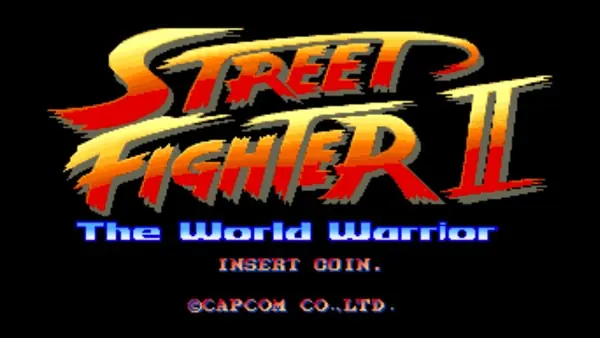
Capcom ran early location tests in Japan and North America and launched the game in Japanese arcades on 7 March 1991, followed by the rest of the world that month. It runs on Capcom’s CP System board. Akira Nishitani led the game and character design, with Akira Yasuda among the designers, and Yoko Shimomura composed most of the soundtrack, with a few tracks by Isao Abe.
The cabinet was a huge success, with Capcom selling more than 60,000 units of the original version, and it led to a long line of updated editions, starting with Champion Edition.
Arcade original vs. Super Nintendo port
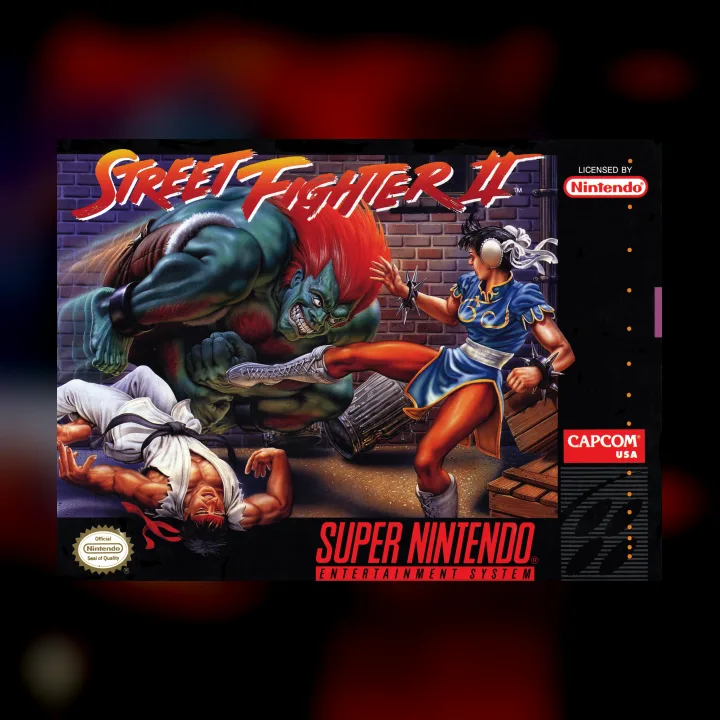
The SNES conversion came out in Japan on 10 June 1992 as Street Fighter II, in North America on 15 July 1992 and in Europe later that year. It was the first Super Nintendo game on a 16-megabit cartridge, and the SNES pad’s four face buttons and two shoulder buttons cover all six attacks, so no moves were lost in the move home.
To fit the smaller cartridge, many details of the arcade game were simplified, but all eight fighters, four bosses and their stages made it across. The SNES version also hides an extra: a code on the Capcom logo screen lets both players choose the same character, something the arcade original does not allow.
Choose the arcade version here for the authentic presentation, or the SNES one for the console experience many players grew up with. The home version sold more than 6.3 million copies worldwide and was Capcom’s best-selling single game for many years.
Getting started
Ryu and Ken are the easiest characters to learn: their fireball, uppercut and hurricane kick cover long range, anti-air and close pressure. Practise the quarter-circle motion until it comes out reliably, then use fireballs to make the opponent jump, and answer the jump with an uppercut.
Against the computer, blocking matters more than attacking. Hold back on the joystick to block high and down-back to block low, and punish the opponent after their attacks miss.
Sources: en.wikipedia.org, hiddenpalace.org, arcade-history.com, giantbomb.com
Versions
Street Fighter II is here in 2 versions. Each one plays in its own emulator.
Screenshots
Game details
- Platforms
- Arcade, Nintendo SNES
- Released
- 1991 (Arcade), 1992 (Nintendo SNES)
- Developer
- Capcom
- Publisher
- Capcom
- Genre
- Fighting
- Players
- 1–2 players
- Arcade release (Japan)
- 7 March 1991
- Arcade hardware
- Capcom CP System (CPS-1)
- SNES release (Japan)
- 10 June 1992
- SNES release (North America)
- 15 July 1992
- SNES cartridge
- 16 megabits – the first SNES game that size
- Main composer
- Yoko Shimomura
- SNES sales
- Over 6.3 million copies worldwide
- Arcade units
- More than 60,000 of the original edition
- Emulators
- FB Alpha 2012 CPS-1 (Arcade), Snes9x (Nintendo SNES)
How to play Street Fighter II
Press Play on the version you want: the game starts fullscreen in your browser, nothing to install. Press Esc or the ‹ Menu button to come back here; your progress is saved and you can continue next time.
Keyboard – Arcade
| Arrow keys | Move |
|---|---|
| V | Insert coin |
| Enter | Start |
| X, Z, S, A | Buttons 1–4 |
| Q / E | Buttons 5 / 6 |
Keyboard – Nintendo SNES
| Arrow keys | Move |
|---|---|
| Z | A |
| X | B |
| A | X |
| S | Y |
| Q / E | L / R |
| Enter | Start |
| V | Select |
Gamepads (Xbox, PlayStation, Switch and most USB or Bluetooth pads) work as soon as you press a button; two pads give two players. On phones and tablets on-screen buttons appear. Keys can be changed in the emulator's Controls menu.
Street Fighter II FAQ
Can I play Street Fighter II online here?
Yes. Choose between Capcom’s CPS-1 arcade board and the 1992 Super Nintendo cartridge – both are free here in the browser. Six attack buttons are easiest on a gamepad, though keyboard and touch work too, and progress is saved on your device.
Can you play as the bosses in Street Fighter II: The World Warrior?
No. Balrog, Vega, Sagat and M. Bison are computer-only in this first edition. They became playable in Champion Edition.
What is the difference between the arcade and SNES versions?
The SNES port simplifies a number of arcade details to fit its 16-megabit cartridge, and it adds a code that lets both players pick the same fighter, which the original arcade game does not allow.
Is Street Fighter II two-player?
Yes. A second player can join at any time for one-on-one versus matches in both versions.
Why are the boss names different in Japan?
Capcom rotated the names of the boxer, the claw fighter and the dictator for the western release, out of concern that the boxer’s original name and Mike Tyson-inspired look could invite a likeness lawsuit.
Comments
No comments yet. Be the first!