Pac-Man
1980 · Namco · Action · 1–2 players
ArcadeAtari 2600Nintendo NESNintendo Game Boy
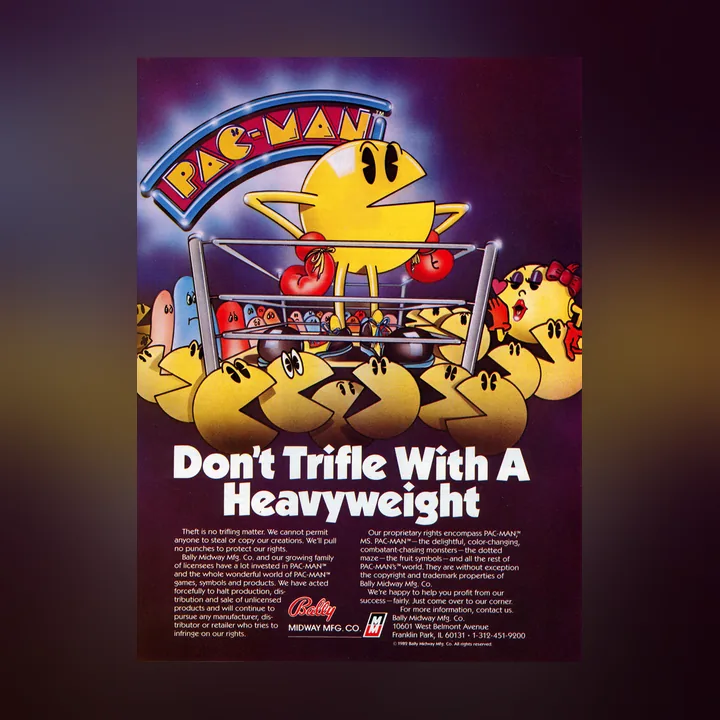
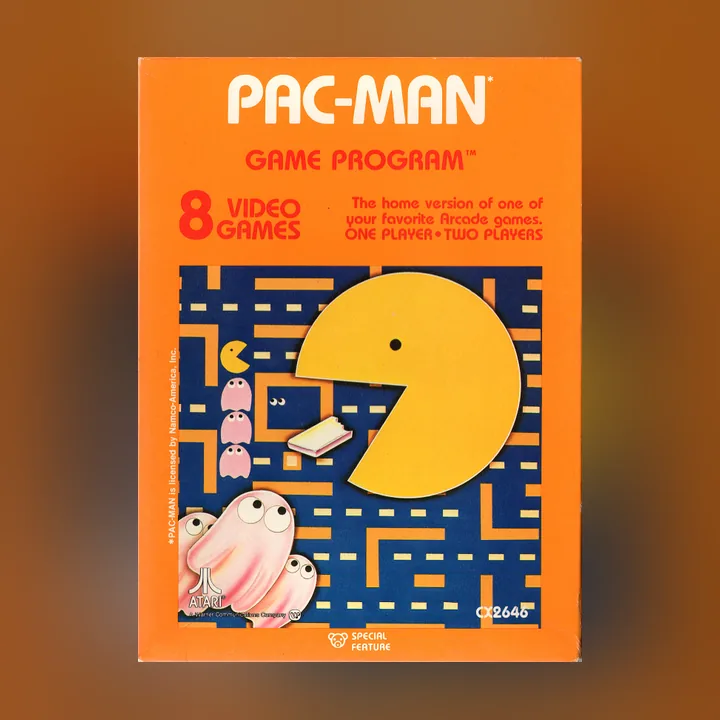
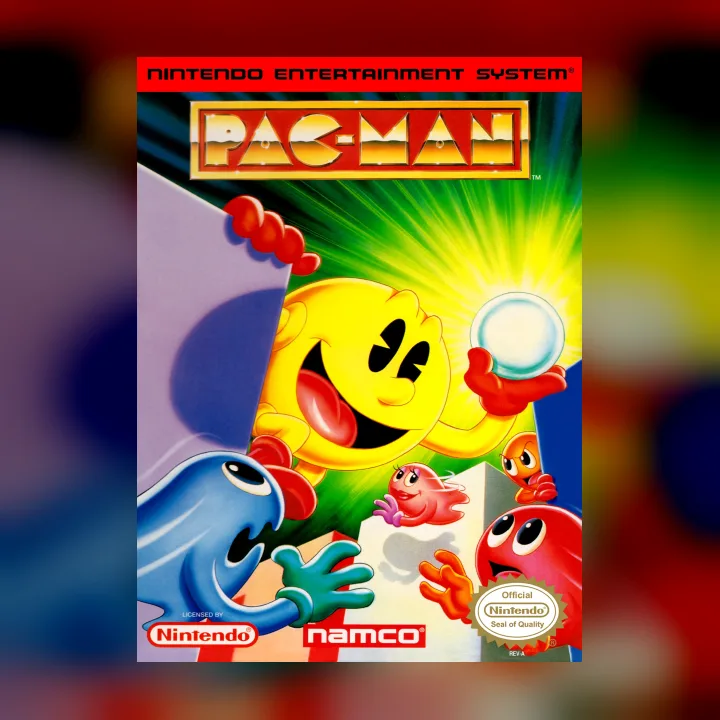
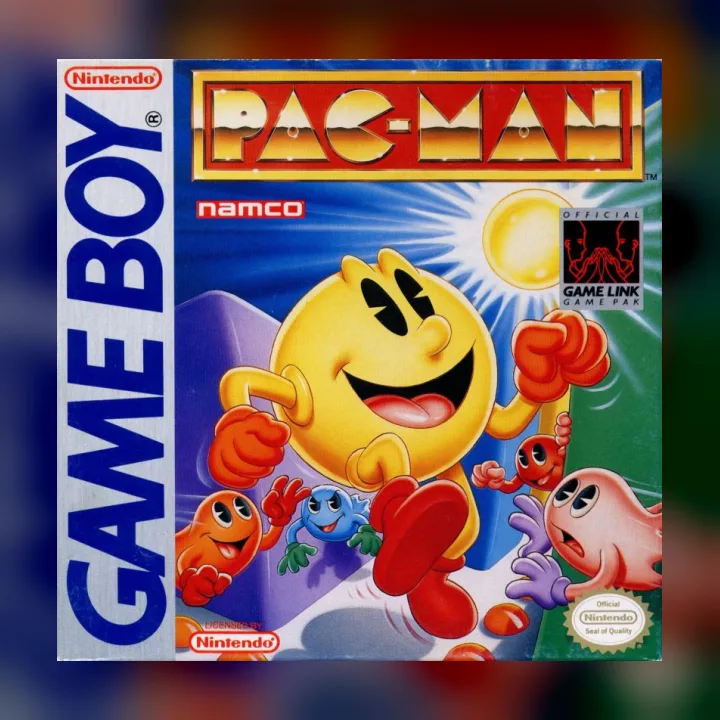
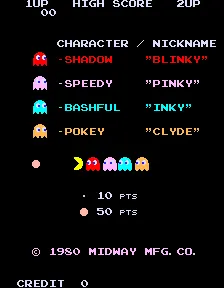
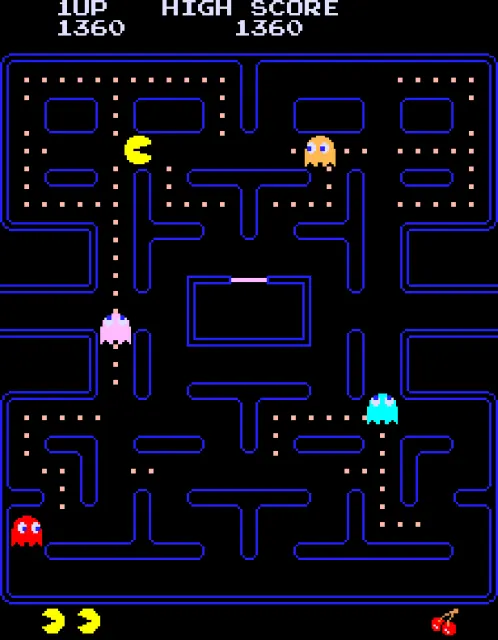
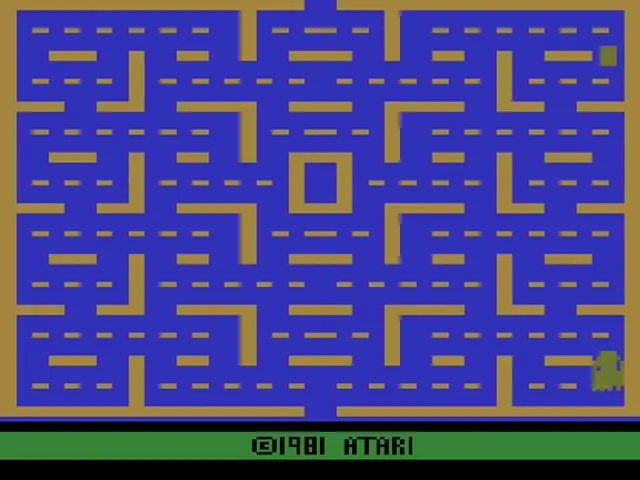
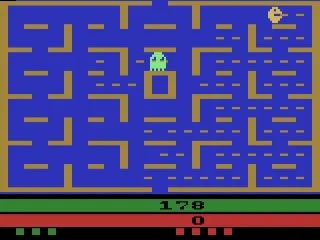
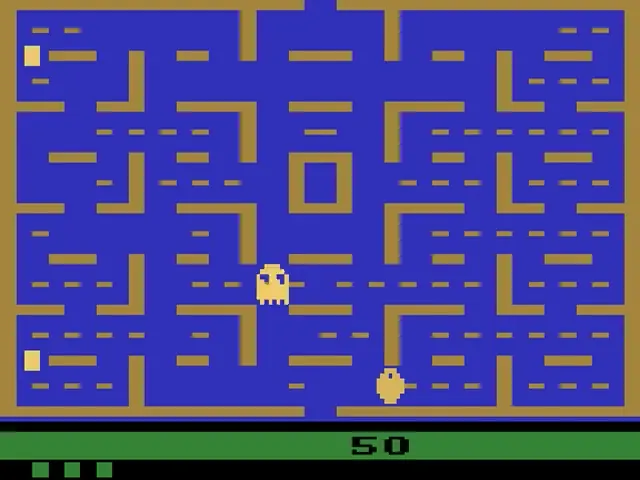
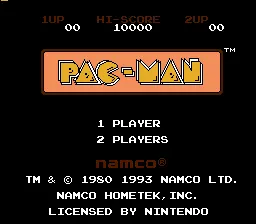
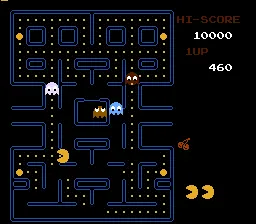
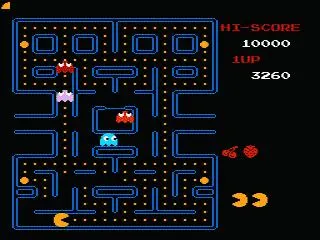
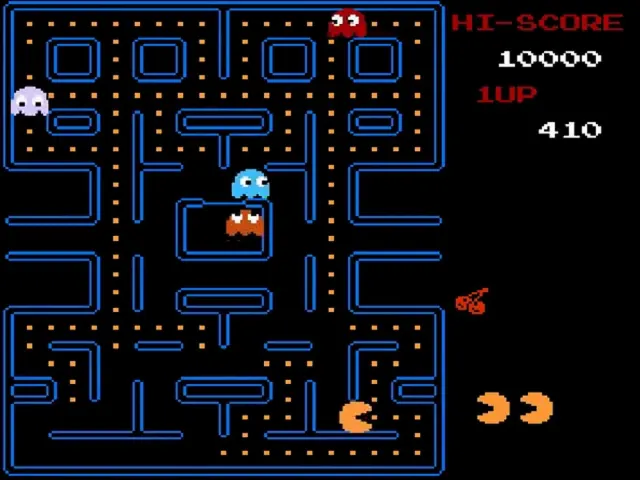
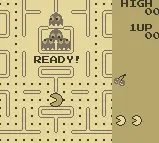
Four takes on the same maze: Namco’s 1980 arcade original, the 1982 Atari 2600 cartridge that became that console’s best-selling game, Namco’s own NES conversion in its European release, and the Game Boy version with its close-up and whole-maze screen modes.
The original 1980 Arcade game, the 1982 Atari 2600 version, the 1984 Nintendo NES version and the 1991 Nintendo Game Boy version, free to play in your browser.
Play on ArcadeFinalBurn Neo
Play on Atari 2600Stella
Play on Nintendo NESFCEUmm
Play on Nintendo Game BoyGambatte
Runs in your browser, fullscreen. Keyboard, gamepad and touch controls. Your progress is saved on this device.
About Pac-Man
Dots, energizers and four ghosts
You steer a round yellow character through a maze, eating every dot to clear the board while four ghosts roam the corridors. Touch a ghost and you lose a life. In each corner sits a flashing energizer; eat one and the ghosts turn blue and flee, and for a short time you can chase them down for bonus points.
The ghosts do not behave alike. Red Blinky heads straight for you, Pinky and Inky aim for the space ahead of Pac-Man to cut you off, and orange Clyde switches between chasing and wandering away depending on how close he is. Bonus fruit appears below the ghosts’ home after a certain number of dots.
Puck Man becomes Pac-Man
Toru Iwatani led the design at Namco, and the game first appeared in Japanese arcades on 22 May 1980 as Puck Man. Midway brought it to North America later that year as Pac-Man, partly because the original name was easy for vandals to deface.
Guinness World Records recognises it as the most successful coin-operated arcade game, with 293,822 machines installed worldwide. A counting bug breaks the 256th board, filling half the screen with garbled tiles – the famous kill screen – and caps the perfect score at 3,333,360 points.
Atari 2600 and NES
Atari’s 1982 cartridge, programmed by Tod Frye on 4 KB, rebuilt the game almost from scratch: the maze is turned sideways, dots become rectangular wafers, the fruit is replaced by a single vitamin and all four ghosts share one colour and flicker. Critics were harsh, yet it sold more than seven million cartridges in 1982 and remains the console’s best-selling game.
Namco’s own Family Computer conversion arrived in Japan on 2 November 1984. In North America, Tengen released it in October 1988, first licensed and later as an unlicensed black cartridge, before Namco reissued it in November 1993; a European cartridge followed in 1993, and that is the NES version here. It keeps the arcade maze, the coloured ghosts and the energizers, with simpler fruit graphics and sound.
Pac-Man on the Game Boy
Namco also built a Game Boy version, which Namco Hometek brought to North America in April 1991, and which was released in Europe the same year. The arcade maze is too big for the handheld’s small screen, so on the title screen you pick a size with left or right on the D-pad: the full-size view gives a close-up of the part of the maze around Pac-Man, while the half-size view fits the whole maze on screen at once. Without colour the ghosts look alike, and after an energizer they turn a darker shade instead of blue.
Scores sit in a column at the right, an extra life arrives at 10,000 points, Start pauses, and holding Start and Select while pressing A, B or the D-pad resets. The cartridge also had a link-cable mode for two Game Boys: each player runs their own maze, ghosts you eat pop up on your rival’s screen, and the match ends when someone clears four mazes or runs out of lives. That mode needs two linked consoles, so here you play the single-player game. Namco later reissued this version as Pac-Man: Special Color Edition for the Game Boy Color in 1999.
Beginner tips
Save the energizers until ghosts are close, so you can turn the tables on several at once – each ghost eaten during one energizer is worth more than the last. Use the side tunnels when you are being chased, since ghosts slow down inside them. On the Game Boy, switch to the half-size screen if you lose track of the ghosts.
Sources: en.wikipedia.org, arcade-history.com, famiwiki.net, vgmpf.com, ssbwiki.com, indiegamerchick.com, videogamemanual.com, ja.wikipedia.org, digitallydownloaded.net, cubed3.com
Versions
Pac-Man is here in 4 versions. Each one plays in its own emulator.
Screenshots
Game details
- Platforms
- Arcade, Atari 2600, Nintendo NES, Nintendo Game Boy
- Released
- 1980 (Arcade), 1982 (Atari 2600), 1984 (Nintendo NES), 1991 (Nintendo Game Boy)
- Developer
- Namco (Arcade), Atari (Atari 2600), Namco (Nintendo NES), Namco (Nintendo Game Boy)
- Publisher
- Namco (Arcade), Atari (Atari 2600), Namcot (Nintendo NES), Namco (Nintendo Game Boy)
- Genre
- Action
- Players
- 1–2 players (Arcade), 1–2 players (Atari 2600), 1–2 players (Nintendo NES), 1 player (Nintendo Game Boy)
- Arcade release (Japan)
- 22 May 1980, as Puck Man
- Arcade release (North America)
- 1980, by Midway
- Designer
- Toru Iwatani
- Atari 2600 release
- March 1982, programmed by Tod Frye
- Atari 2600 sales
- Over 7 million cartridges in 1982
- Famicom release (Japan)
- 2 November 1984, Namco
- NES release
- North America October 1988 by Tengen, Namco reissue November 1993; Europe 1993
- Game Boy release
- Developed by Namco; North America April 1991 (Namco Hometek), Europe 1991
- Perfect arcade score
- 3,333,360 points
- Version on this page
- Arcade original, Atari 2600, the European NES cartridge and the European Game Boy cartridge
- Emulators
- FinalBurn Neo (Arcade), Stella (Atari 2600), FCEUmm (Nintendo NES), Gambatte (Nintendo Game Boy)
How to play Pac-Man
Press Play on the version you want: the game starts fullscreen in your browser, nothing to install. Press Esc or the ‹ Menu button to come back here; your progress is saved and you can continue next time.
Keyboard – Arcade
| Arrow keys | Move |
|---|---|
| V | Insert coin |
| Enter | Start |
| X, Z, S, A | Buttons 1–4 |
| Q / E | Buttons 5 / 6 |
Keyboard – Atari 2600
| Arrow keys | Move |
|---|---|
| X | Fire |
| Enter | Reset (start) |
| V | Select (game mode) |
Keyboard – Nintendo NES
| Arrow keys | Move |
|---|---|
| Z | A button |
| X | B button |
| Enter | Start |
| V | Select |
Keyboard – Nintendo Game Boy
| Arrow keys | Move |
|---|---|
| Z | A button |
| X | B button |
| Enter | Start |
| V | Select |
Gamepads (Xbox, PlayStation, Switch and most USB or Bluetooth pads) work as soon as you press a button; two pads give two players. On phones and tablets on-screen buttons appear. Keys can be changed in the emulator's Controls menu.
Pac-Man FAQ
Can I play the original Pac-Man online for free?
You can, and in four forms: Namco’s 1980 arcade board, Atari’s 1982 Atari 2600 cartridge, the European NES cartridge and the European Game Boy cartridge. Choose one and play it free in the browser with a keyboard, gamepad or touch controls; progress is kept on your device.
What are the names of the Pac-Man ghosts?
Blinky (red), Pinky (pink), Inky (cyan) and Clyde (orange). Each one follows a different chasing pattern in the arcade game.
Which home version of Pac-Man is closest to the arcade?
The NES version, based on Namco’s 1984 Famicom conversion, keeps the arcade maze and coloured ghosts. The Atari 2600 cartridge was heavily simplified, and the Game Boy version has to zoom in or shrink the maze to fit its screen.
How do the two screen sizes work in Game Boy Pac-Man?
On the title screen, press left or right on the D-pad. Full size gives a close-up of Pac-Man’s part of the maze; half size shows the entire maze at once.
What happens on level 256 of Pac-Man?
In the arcade game, a bug garbles the right half of the maze, so the level cannot be completed. It is known as the kill screen.
Comments
No comments yet. Be the first!