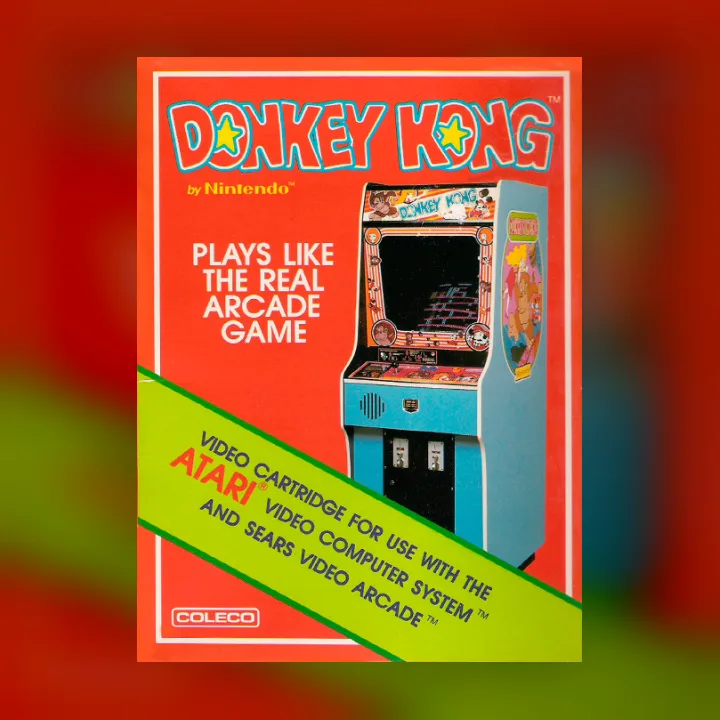
Donkey Kong
1982 · Coleco Industries · Platform · 1 player
Atari 2600Nintendo NES
Two home versions of Nintendo’s 1981 arcade hit: the Famicom launch title that later reached the NES, with three of the arcade’s four screens, and Garry Kitchen’s 1982 Atari 2600 conversion for Coleco, which kept two.
The original 1982 Atari 2600 game and the 1983 Nintendo NES version, free to play in your browser.
Runs in your browser, fullscreen. Keyboard, gamepad and touch controls. Your progress is saved on this device.
About Donkey Kong
The arcade hit behind the cartridges
Nintendo’s Donkey Kong reached Japanese arcades in July 1981 and North America that October. Shigeru Miyamoto designed it, and it introduced the carpenter hero called Jumpman during development, later Mario, and the captive Lady, renamed Pauline in the West.
This page hosts two home versions: Nintendo’s own Famicom and NES conversion, and the Atari 2600 cartridge that Coleco, holder of the home console rights in 1982, published for Atari’s console.
The Famicom and NES version
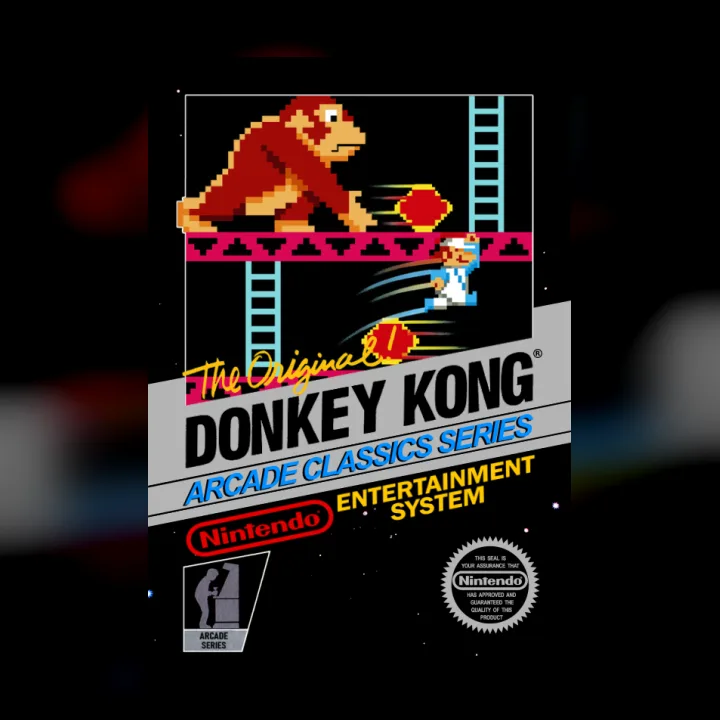
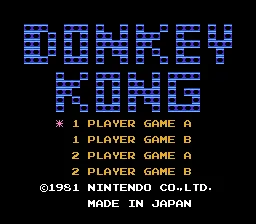
Donkey Kong was one of the three games available when the Famicom launched in Japan on 15 July 1983, ported by Nintendo R&D2; Masayuki Uemura, the console’s lead architect, designed the hardware with this game in mind. It sold 840,000 copies in Japan, then reached the NES in North America in June 1986 in the Arcade Classics Series and in Europe on 15 October 1986.
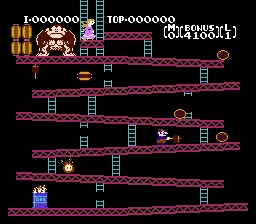
Early cartridges had little memory, so the cement factory stage and most cutscenes were dropped: you play the girders, the elevators and the rivets in a loop. A new title tune by Yukio Kaneoka was added, and the first hammer on the girder stage sits one level higher. Smaller details changed as well: Pauline’s hat is no longer among the bonus items, Donkey Kong is a darker brown, and the NES game has its own kill screen on level 133. The cement factory only returned in the later Virtual Console release Donkey Kong: Original Edition.
Garry Kitchen’s Atari 2600 conversion
The 2600 port was programmed by Garry Kitchen in a few months, with no help from Nintendo and very little from Coleco; he has said he worked without sleep through the final 72 hours.
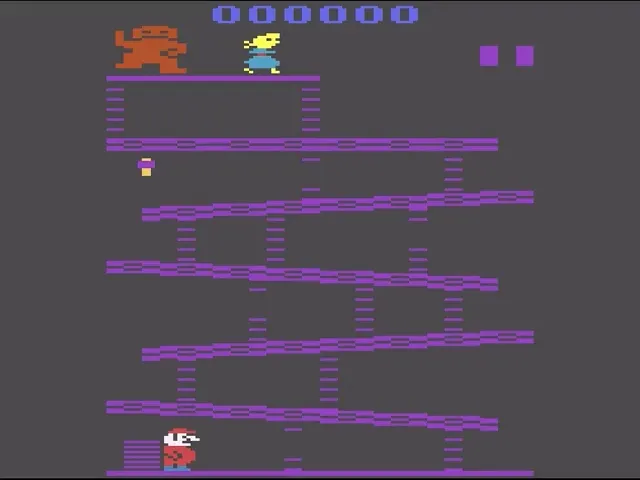
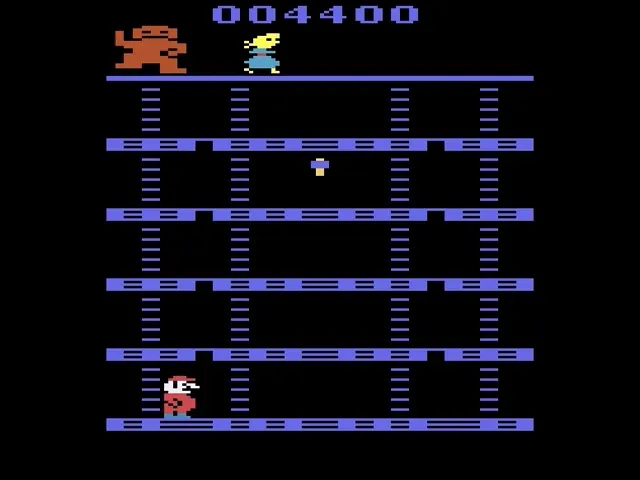
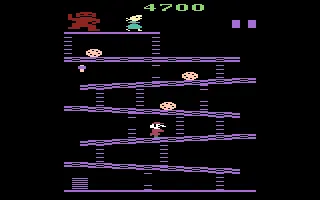
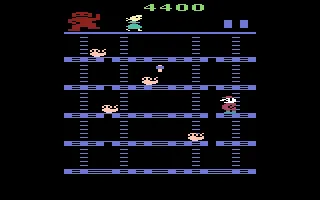
Memory was the hard limit: it keeps only the girders with rolling barrels and the rivet stage. Even so, Coleco sold about four million copies in 1982, and Atari re-released the cartridge in 1987.
Ramps, rivets and the hammer
On the ramp screen you climb ladders while Donkey Kong rolls barrels down at you; on the rivet screen you remove every rivet by running or jumping over it, bringing the ape crashing down. In the 2600 version each screen starts with a 5,000-point bonus that counts down, and if it reaches zero you lose a Mario.
The hammer smashes barrels and fireballs, but while you hold it you cannot climb ladders, and it vanishes after a few seconds. After the last screen the game loops back to the start, getting harder each time.
Tips for a longer run
Do not linger: the bonus timer is also your life clock. On the ramps, wait at the bottom of a ladder until a barrel has passed, then climb, and take the hammer only when you have a safe stretch of flat girder.
On the rivet screen, clear rivets on one side before crossing over, so fireballs have fewer chances to trap you. Points matter less than survival early on: a steady, careful first loop sets up a much better score than a rushed one.
Sources: en.wikipedia.org, mariowiki.com, atariage.com, themushroomkingdom.net, dfarq.homeip.net, atarimagazines.com
Versions
Donkey Kong is here in 2 versions. Each one plays in its own emulator.
Screenshots
Game details
- Platforms
- Atari 2600, Nintendo NES
- Released
- 1982 (Atari 2600), 1983 (Nintendo NES)
- Developer
- Coleco Industries (Atari 2600), Nintendo (Nintendo NES)
- Publisher
- Coleco Industries (Atari 2600), Nintendo (Nintendo NES)
- Genre
- Platform (Atari 2600), Action, Platform (Nintendo NES)
- Players
- 1 player (Atari 2600), 1–2 players (Nintendo NES)
- Arcade original
- Nintendo, July 1981 (Japan), designed by Shigeru Miyamoto
- Famicom release (Japan)
- 15 July 1983, launch title
- NES release (North America)
- June 1986, Arcade Classics Series
- NES release (Europe)
- 15 October 1986
- NES screens
- 3 of the arcade’s 4 (no cement factory)
- Atari 2600 release
- 1982, Coleco; programmed by Garry Kitchen
- Atari 2600 screens
- 2 of the arcade’s 4: barrel ramps and rivets
- Atari 2600 sales
- About 4 million copies in 1982
- Versions on this page
- NES (World, Rev 1) and Atari 2600
- Emulators
- Stella (Atari 2600), FCEUmm (Nintendo NES)
How to play Donkey Kong
Press Play on the version you want: the game starts fullscreen in your browser, nothing to install. Press Esc or the ‹ Menu button to come back here; your progress is saved and you can continue next time.
Keyboard – Atari 2600
| Arrow keys | Move |
|---|---|
| X | Fire |
| Enter | Reset (start) |
| V | Select (game mode) |
Keyboard – Nintendo NES
| Arrow keys | Move |
|---|---|
| Z | A button |
| X | B button |
| Enter | Start |
| V | Select |
Gamepads (Xbox, PlayStation, Switch and most USB or Bluetooth pads) work as soon as you press a button; two pads give two players. On phones and tablets on-screen buttons appear. Keys can be changed in the emulator's Controls menu.
Donkey Kong FAQ
Can I play Donkey Kong online?
Yes – pick the NES cartridge or Coleco’s Atari 2600 version and play free in your web browser with a keyboard, gamepad or touchscreen. Progress is remembered on this device only.
Why is the cement factory missing from NES Donkey Kong?
Early Famicom cartridges did not have enough memory, so Nintendo left out the cement factory stage and most cutscenes. The NES version has the girders, the elevators and the rivets.
How many levels does Donkey Kong have on the Atari 2600?
Two screens: the barrel ramps and the rivet stage. They alternate and get harder each loop.
Why was Donkey Kong on the Atari 2600 made by Coleco?
Coleco held the home console rights to Donkey Kong in 1982, so it produced the 2600 version alongside the one for its own ColecoVision.
Comments
No comments yet. Be the first!