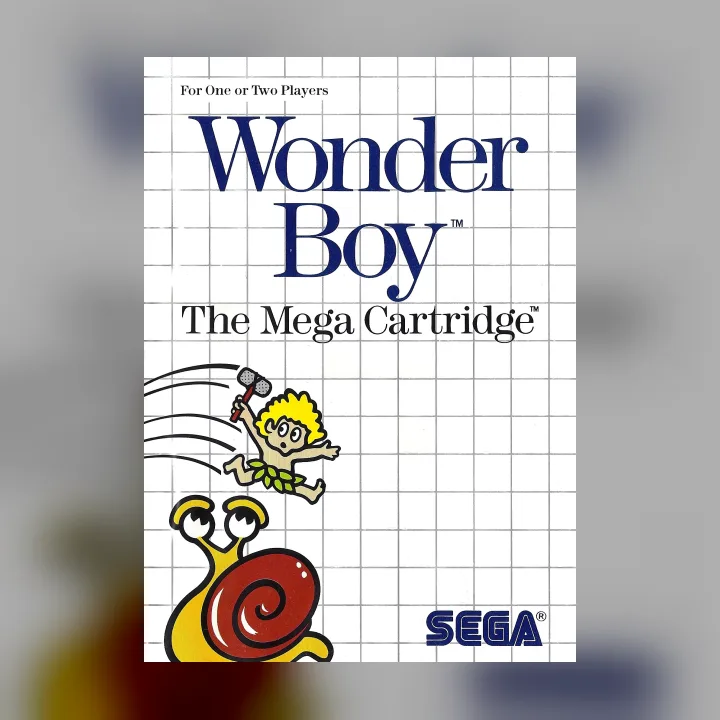
Wonder Boy
1987 · Sega of America · Platform · 1–2 players
Sega Master System
The 1986 Escape and Sega arcade hit came home to the Master System in 1987. Tom-Tom races right through forests, seas, caves and ice, eating fruit to keep his vitality up and smashing eggs for weapons, across nine areas that include two made just for this version.
The 1987 Sega Master System game, free to play in your browser.
Runs in your browser, fullscreen. Keyboard, gamepad and touch controls. Your progress is saved on this device.
About Wonder Boy
From the arcade to the Master System
Wonder Boy began in 1986 as an arcade platformer created by the small studio Escape, later renamed Westone, and released by Sega. Ryuichi Nishizawa directed and designed the original, working with a team of only three people. Its success led to several home versions, and the Master System cartridge follows the arcade game far more closely than the earlier SG-1000 card did.
In Japan it came out on 22 March 1987 for the Sega Mark III as Super Wonder Boy, a name chosen because it was such a step up from the earlier SG-1000 card version. North America got it in June 1987 and Europe the same year, simply titled Wonder Boy. The graphics come straight from the arcade, while the sound was reworked for the console’s simpler audio chip.
Keep moving, keep eating
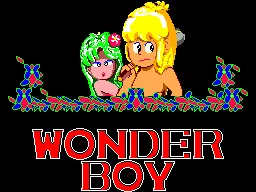
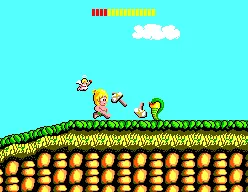
The hero, a caveman-like boy called Tom-Tom in this version, sets out to rescue his girlfriend Tanya, who has been kidnapped by a villainous king. Stages scroll only to the right, and his vitality bar drains steadily the whole time, so stopping is never a good idea. Fruit tops the bar back up, which makes it both a health meter and a timer.
One button jumps and the other throws a stone hatchet. Holding the attack button makes Tom-Tom run, and on the Master System he only reaches his highest jumps while running, a small change from the arcade. The score and remaining lives appear before each round rather than on screen during play.
Eggs, dolls and hidden rounds
Eggs scattered through the levels hold the useful items: the hatchet, a skateboard that speeds Tom-Tom along and absorbs one hit, and a guardian fairy that briefly lets him destroy enemies just by touching them. Spotted eggs are bad news, carrying a curse that drains vitality faster. Poisonous mushrooms take a chunk of the bar at once.
The arcade game had seven areas of four rounds each. The Master System version adds two new areas, which become the fourth and eighth, for nine in total. At the end of every area the villain appears as a boss, and when beaten his mask flies off and turns into a bonus item before he escapes. Each round also hides a small doll in Tanya’s likeness that doubles the end-of-round bonus, and collecting all 36 opens a secret tenth area.
Two paths from one game
Escape kept the rights to the game design, while Sega owned the Wonder Boy name and characters. Escape therefore worked with Hudson Soft on a version for the NES and MSX with a new hero and title. The result was Adventure Island, starring Master Higgins, a caricature of the Hudson personality Takahashi Meijin. Adventure Island is based on the arcade game, so it lacks the extra areas found here. Sega’s own series went in another direction with Wonder Boy in Monster Land.
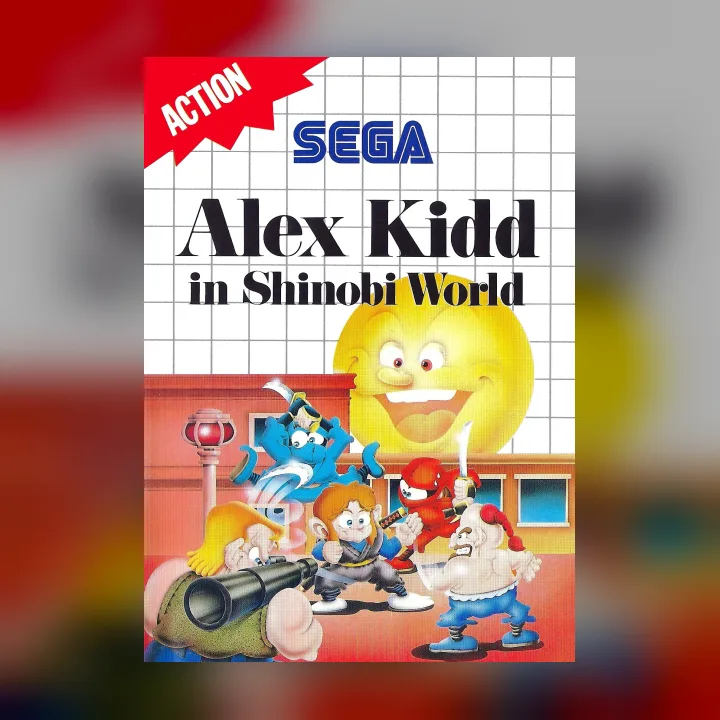
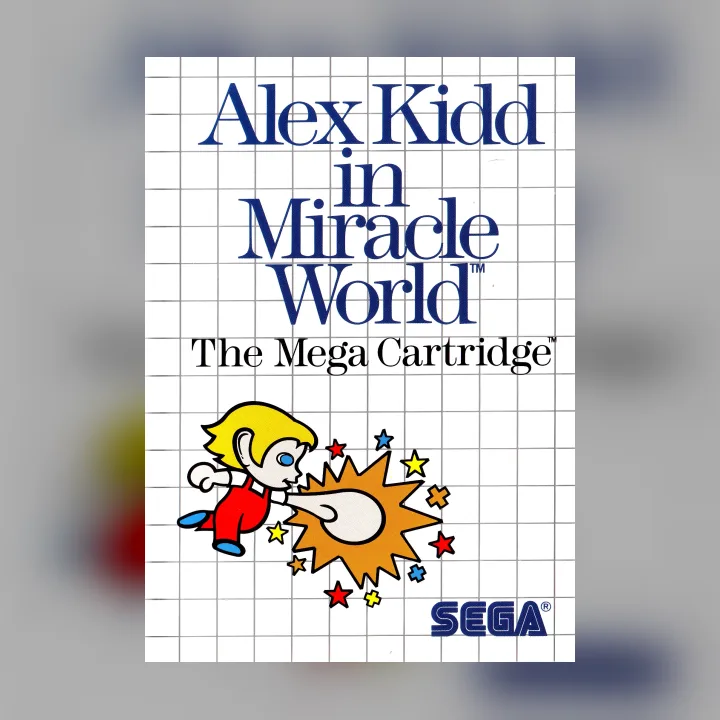
The Master System version later came to the Wii Virtual Console in 2008 and was included in Wonder Boy Collection in 2022. Fans of quick Master System platformers can also try Alex Kidd in Miracle World and Alex Kidd in Shinobi World on this site.
Sources: en.wikipedia.org, segaretro.org, strategywiki.org
Screenshots
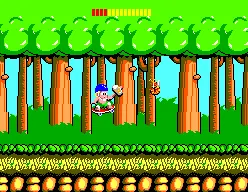
Game details
- Platform
- Sega Master System
- Released
- 1987
- Developer
- Escape
- Publisher
- Sega of America
- Genre
- Platform
- Players
- 1–2 players
- Japan release
- 22 March 1987 (Sega Mark III, as Super Wonder Boy)
- North America release
- June 1987
- Europe release
- 1987
- Original arcade game
- 1986, Escape and Sega
- Developer
- Escape (later Westone)
- Publisher
- Sega
- Arcade director
- Ryuichi Nishizawa
- Areas
- 9, plus a hidden tenth area
- Wii Virtual Console
- North America 31 March 2008, Japan 8 April 2008, Europe 11 April 2008
- Version on this page
- Wonder Boy (USA, Europe, Brazil) (En) (Rev 1), the 128 KB export cartridge marked as revision 1 in its header
- Emulator
- Genesis Plus GX
How to play Wonder Boy
Press Play: the game starts fullscreen in your browser, nothing to install. Press Esc or the ‹ Menu button to come back here; your progress is saved and you can continue next time.
Keyboard
| Arrow keys | Move |
|---|---|
| X, Z, S, A | Action buttons |
| Enter | Start |
| V | Select |
Gamepads (Xbox, PlayStation, Switch and most USB or Bluetooth pads) work as soon as you press a button; two pads give two players. On phones and tablets on-screen buttons appear. Keys can be changed in the emulator's Controls menu.
Wonder Boy FAQ
Can I play Wonder Boy online?
Yes, for free on this page. The Master System cartridge runs in your browser with keyboard, gamepad or touch controls, using the D-pad and buttons 1 and 2, and your saves are kept in the browser.
Why does Tom-Tom keep losing energy?
His vitality bar runs down constantly as a built-in timer. Collect fruit as you go to refill it, and avoid spotted eggs and poisonous mushrooms, which drain it faster.
What do the dolls do?
Each round hides one doll. Picking it up doubles the bonus at the end of the round, and finding all 36 unlocks a secret tenth area.
Is Wonder Boy the same game as Adventure Island?
They share the same design. Escape owned the game design and made Adventure Island with Hudson Soft for other systems, but with a different hero and without the two extra areas of this Master System version.
How do you jump higher?
Hold the attack button to run, then jump. On the Master System the highest jumps are only possible while running.
Comments
No comments yet. Be the first!