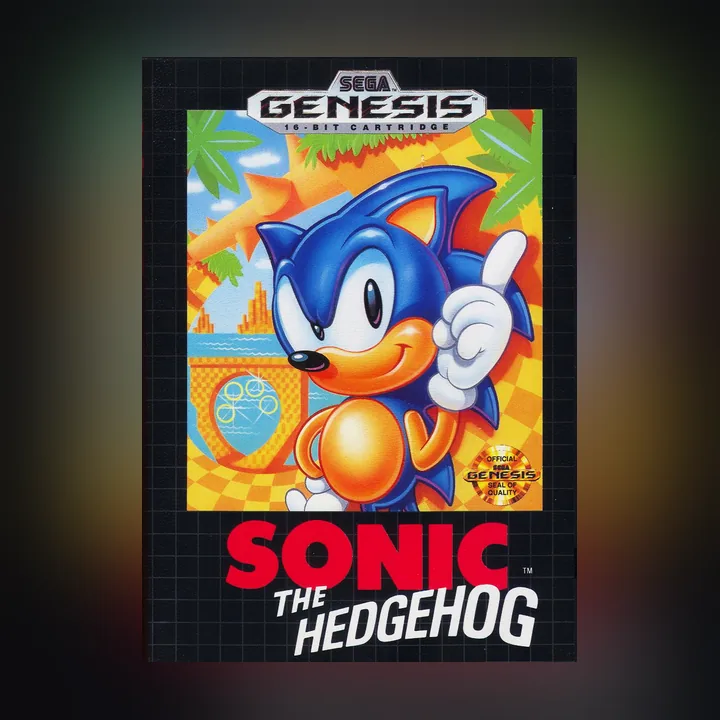
Sega Mega Drive
1991 · Sonic Team · Sega of America
Emulator: Genesis Plus GX · 378 KB
Play the Sega Mega Drive version
1991 · Sega of America · Platform · 1 player
Sega Mega DriveSega Master System
Two different 1991 games share this name. The Mega Drive original introduced Sonic, Robotnik, loops and rotating Chaos Emerald mazes; the 8-bit Master System game by Ancient has its own zones, hidden emeralds and a Yuzo Koshiro soundtrack. Both are playable here.
The 1991 Sega Mega Drive game and the 1991 Sega Master System version, free to play in your browser.
Runs in your browser, fullscreen. Keyboard, gamepad and touch controls. Your progress is saved on this device.
Sega wanted a hero fast enough to rival Mario, and the result was a blue hedgehog who curls into a ball to attack. Sonic’s main move is the spin jump, which destroys most of Doctor Robotnik’s robots and frees the animals trapped inside. On the Mega Drive, rolling down slopes builds even more speed, and the levels are built around that momentum, with loops, ramps, springs and tunnels.
Rings are your safety net in both versions. Carry at least one and a hit only costs you your rings; get hit with none and you lose a life. On the Mega Drive you can grab some of the scattered rings back before they vanish. There is no Spin Dash yet – that move arrived with the sequel – so building speed from a standstill takes a little patience.
The 16-bit adventure runs through Green Hill, Marble, Spring Yard, Labyrinth, Star Light and Scrap Brain, each with three acts, and ends in a short Final Zone. Marble slows things down with lava and pushable blocks, Spring Yard feels like a pinball table, and Labyrinth floods Sonic’s path, so you must find air bubbles before the drowning countdown ends. Each third act ends with Robotnik in a new contraption.
Finish act 1 or 2 with 50 or more rings and a giant ring appears past the goal sign. Jump through it to enter a rotating maze and reach the Chaos Emerald in the middle. Collect all six for the good ending.
The 8-bit Sonic the Hedgehog is not a port. Sega handed it to Ancient, a new studio founded by composer Yuzo Koshiro, and the team built it from scratch for Sega’s 8-bit hardware. It was Ancient’s first game and its only Sonic title. Koshiro also wrote the music: he converted Masato Nakamura’s Mega Drive score to start with, kept three of those tracks and composed the rest himself, including the much-loved Bridge Zone theme.
The Master System version went on sale in Europe in November 1991. Sega later built the game into Master System II consoles in Europe, and Tectoy did the same with a later Brazilian model. The copy on this page is that European built-in version, so it starts straight away with no cartridge. A Game Gear version also exists, but it is not on this site.
The Master System game has six zones – Green Hill, Bridge, Jungle, Labyrinth, Scrap Brain and Sky Base – each with two main acts and a boss fight with Robotnik. The pace is slower and more about exploration, and there are no loops. Bridge Zone’s second act scrolls on its own, Jungle’s second act is a vertical climb where the screen rises with you, and Sky Base hosts the final showdown with Robotnik.
Here the Chaos Emeralds are hidden inside certain acts rather than in special stages, so search side paths carefully; you need all six for the best ending. Finish an act with more than 50 rings to reach a pinball-like bonus stage full of extra rings and continues. Be careful, though: in this version, rings you drop when hit cannot be picked up again.
Speed is optional. Many hazards punish players who rush, so slow down when the path disappears ahead of you, and keep at least one ring before every boss. On the Mega Drive, higher routes are usually safer and faster. On the Master System, explore every corner of each act for emeralds, and watch the spinning signpost at the end of an act, which can award bonuses.
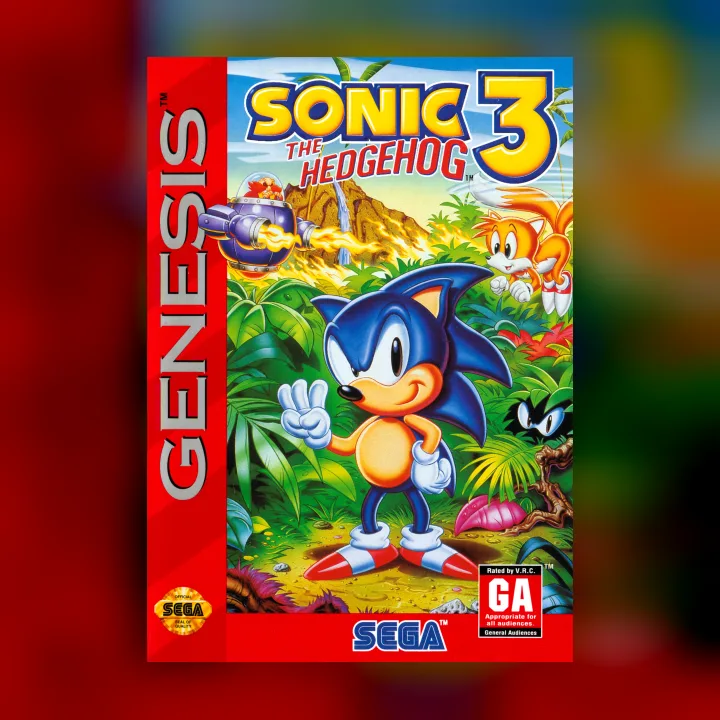
If you enjoy the 8-bit style, the later handheld adventure Sonic the Hedgehog: Triple Trouble is also on this site, and the Mega Drive story continues in Sonic the Hedgehog 3.
Sources: en.wikipedia.org, computinghistory.org.uk, indie-hive.com, giantbomb.com, sonicstadium.org, sega.fandom.com
Sonic the Hedgehog is here in 2 versions. Each one plays in its own emulator.
1991 · Sonic Team · Sega of America
Emulator: Genesis Plus GX · 378 KB
Play the Sega Mega Drive version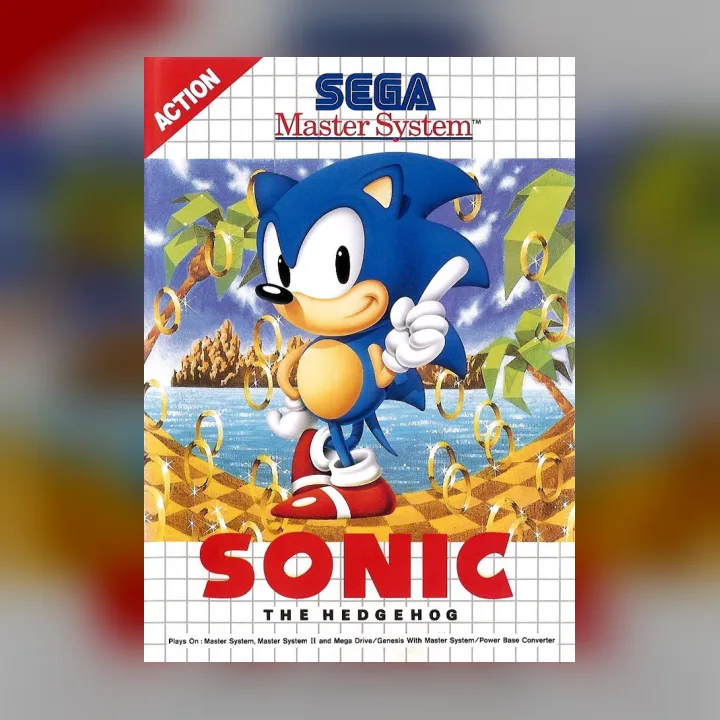
1991 · Ancient · Sega of America
Emulator: Genesis Plus GX · 144 KB
Play the Sega Master System versionPress Play on the version you want: the game starts fullscreen in your browser, nothing to install. Press Esc or the ‹ Menu button to come back here; your progress is saved and you can continue next time.
| Arrow keys | Move |
|---|---|
| S | A button |
| X | B button |
| Z | C button |
| Enter | Start |
| Arrow keys | Move |
|---|---|
| X, Z, S, A | Action buttons |
| Enter | Start |
| V | Select |
Gamepads (Xbox, PlayStation, Switch and most USB or Bluetooth pads) work as soon as you press a button; two pads give two players. On phones and tablets on-screen buttons appear. Keys can be changed in the emulator's Controls menu.
Yes. Both the 1991 Mega Drive game and the 8-bit Master System game play free in your browser on this page. Use a keyboard, gamepad or touchscreen; your progress is saved on this device.
No. Ancient built the 8-bit game from scratch. It shares the story and Green Hill theme, but its zones, level designs, emerald hunt and most of its music are different.
Collect all six Chaos Emeralds. On the Mega Drive they wait in the special stages behind giant rings; on the Master System they are hidden inside certain acts.
Later Master System II consoles sold in Europe, and a later Brazilian model made by Tectoy. The Master System copy on this page is the European built-in version.
No. The Spin Dash first appeared in the Mega Drive Sonic the Hedgehog 2; this game only has rolling and the spin jump.
No comments yet. Be the first!