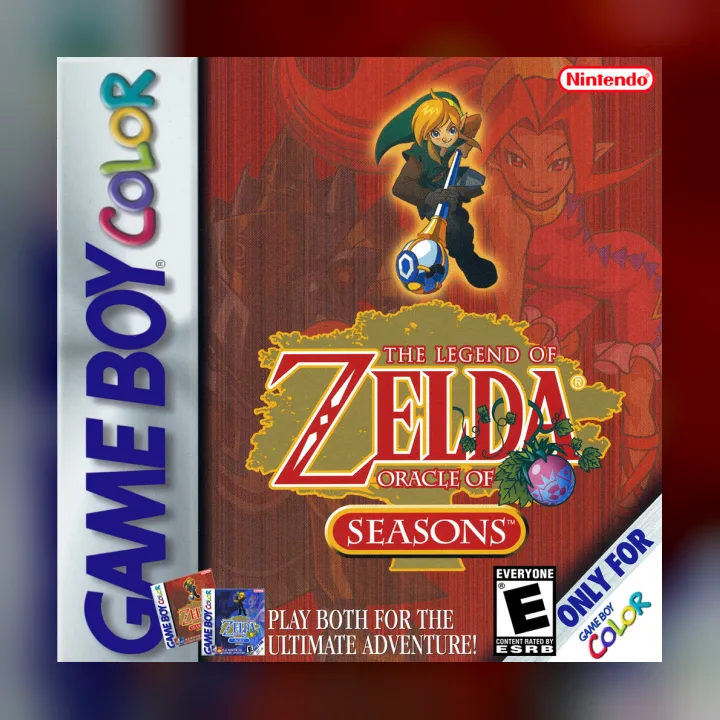
The Legend of Zelda: Oracle of Seasons
2001 · Nintendo · Action, Adventure, Role-Playing · 1 player
Nintendo Game Boy Color
Onox, General of Darkness, kidnaps Din, the Oracle of Seasons, and the seasons of Holodrum run wild. In this action-focused 2001 Zelda by Capcom’s Flagship team, Link swings the Rod of Seasons from tree stumps to reshape the land and explores the lava world of Subrosia below.
The 2001 Nintendo Game Boy Color game, free to play in your browser.
Runs in your browser, fullscreen. Keyboard, gamepad and touch controls. Your progress is saved on this device.
About The Legend of Zelda: Oracle of Seasons
Holodrum without its oracle
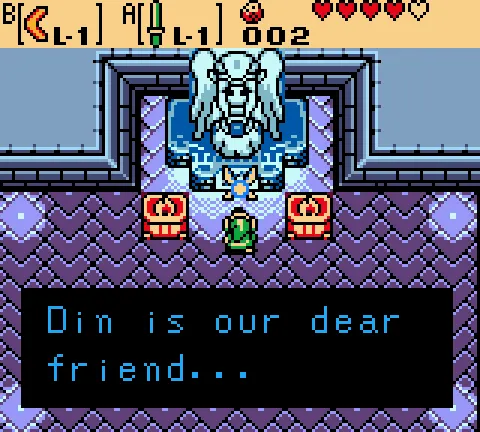
The Triforce carries Link to Holodrum, where he meets Din, who is secretly the Oracle of Seasons. Moments later Onox, the General of Darkness, seizes her, locks her inside a crystal and sends the Temple of Seasons sinking into Subrosia, a world beneath the surface. With the temple gone, spring, summer, autumn and winter start changing at random.
In Horon Village the Maku Tree gives Link the Gnarled Key and explains what he must do: gather the eight Essences of Nature, kept in eight dungeons scattered across Holodrum and Subrosia. Together they let the Maku Tree grow a Huge Maku Seed, which opens the way into Onox’s castle, where Link must defeat the general and free Din.
Swinging the Rod of Seasons
Soon after the first dungeon, Link passes through a portal into Subrosia and receives the Rod of Seasons. Standing on a tree stump and swinging it changes the season of the surrounding area, but the rod starts out weak. Winter is its first power, and each of the four towers around the sunken Temple of Seasons adds another one.
Every season rewrites the map. Winter freezes rivers and lakes so Link can walk across them, and piles snow along the paths. Summer dries out some water and makes vines grow up cliff faces. Spring brings out flowers that act as springboards, and autumn covers holes with leaves and lets Link lift Rock Mushrooms out of his way. A few places stay locked in one season, such as Goron Mountain, which is always winter.
Action, animal friends and Subrosia
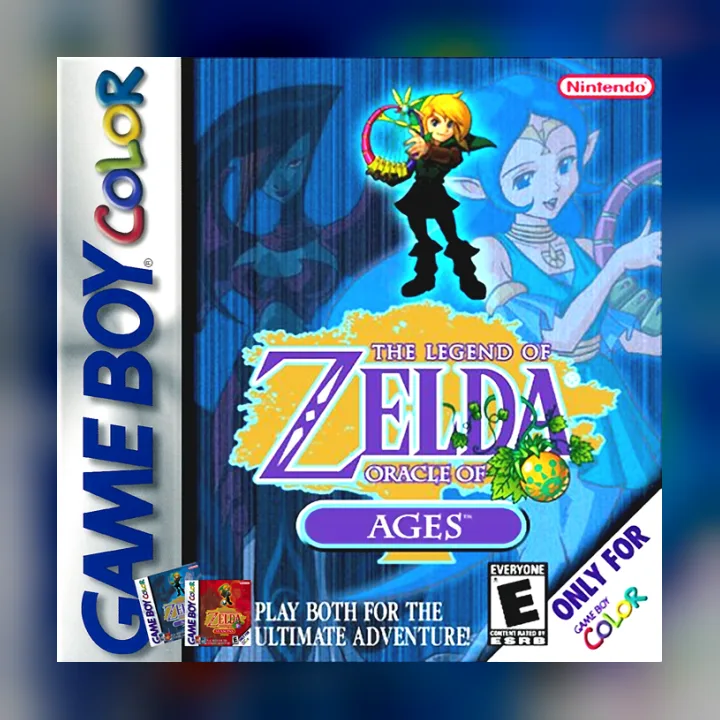
Where its twin, Oracle of Ages, is built around puzzles, Seasons puts combat first. Link can place his sword and shield on either item button, and both can be upgraded twice. New tools include a Slingshot that fires seeds and Magnetic Gloves that pull him toward otherwise unreachable spots.
An animal companion joins the quest through the Strange Flute: Ricky jumps over cliffs and holes, Moosh flies, and Dimitri swims up waterfalls. The flute Link holds also decides how the Natzu region looks, so part of the world changes from one playthrough to the next. Underground, the Subrosians ignore Rupees and pay in Ore Chunks, which buy items such as magic rings at the Subrosia Market. Rings are an optional side collection; some protect Link, while others are jokes or handicaps.
Linking up with Oracle of Ages
Seasons began as the Power chapter of a planned Triforce trilogy at Flagship, a Capcom subsidiary, and was shown at Space World 1999. After Shigeru Miyamoto suggested cutting the series to two games, the Courage chapter was dropped. Hidemaro Fujibayashi directed, and Nintendo published both titles on the same days: 27 February 2001 in Japan, 14 May 2001 in North America and 5 October 2001 in Europe.
Beating Seasons gives a password that starts a linked game of Oracle of Ages, which you can also play on this site, and the reverse works too. The second adventure adds a closing chapter in which Twinrova kidnaps Princess Zelda to revive Ganon. Critics loved the game: IGN gave it 10 out of 10 and found it the better-looking of the two Oracle games thanks to its seasonal colour palettes. This page runs the Legend of Zelda, The - Oracle of Seasons (USA, Australia) cartridge, in English.
Sources: en.wikipedia.org, zeldawiki.wiki, zeldadungeon.net
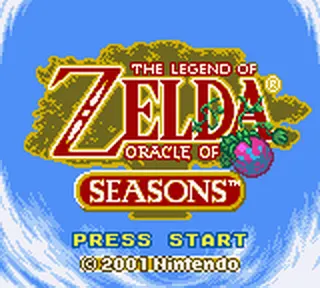
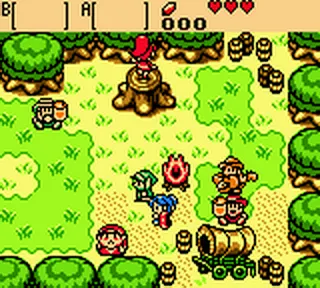
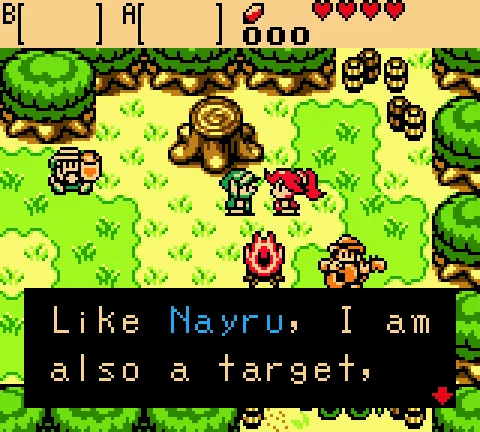
Screenshots
Game details
- Platform
- Nintendo Game Boy Color
- Released
- 2001
- Developer
- Capcom
- Publisher
- Nintendo
- Genre
- Action, Adventure, Role-Playing
- Players
- 1 player
- Japan release
- 27 February 2001
- North America release
- 14 May 2001
- Europe release
- 5 October 2001
- Developer
- Flagship (Capcom)
- Publisher
- Nintendo
- Director
- Hidemaro Fujibayashi
- Setting
- Holodrum and the underground world of Subrosia
- Key item
- Rod of Seasons
- IGN score
- 10/10
- Sales
- 3.99 million (Seasons and Ages combined)
- Version on this page
- Legend of Zelda, The - Oracle of Seasons (USA, Australia), Game Boy Color cartridge
- Emulator
- Gambatte
How to play The Legend of Zelda: Oracle of Seasons
Press Play: the game starts fullscreen in your browser, nothing to install. Press Esc or the ‹ Menu button to come back here; your progress is saved and you can continue next time.
Keyboard
| Arrow keys | Move |
|---|---|
| Z | A button |
| X | B button |
| Enter | Start |
| V | Select |
Gamepads (Xbox, PlayStation, Switch and most USB or Bluetooth pads) work as soon as you press a button; two pads give two players. On phones and tablets on-screen buttons appear. Keys can be changed in the emulator's Controls menu.
The Legend of Zelda: Oracle of Seasons FAQ
Can I play Oracle of Seasons online for free?
Yes. It runs free on this page in your browser on the Game Boy Color, with keyboard, gamepad or touch controls, and your saves stay in the browser.
How do I change the season in Oracle of Seasons?
Stand on a tree stump and swing the Rod of Seasons. At first only winter is available; the other seasons are added as Link visits the towers around the Temple of Seasons in Subrosia.
Should I play Oracle of Seasons or Oracle of Ages first?
Either works. Finishing one gives a password for a linked game of the other, which adds a final chapter against Twinrova and Ganon. Seasons is more action-based, while Ages focuses on puzzles.
Which animal companion should I choose?
It depends on the flute you get. Ricky jumps cliffs and holes, Moosh can fly and Dimitri swims up waterfalls, and your choice changes the layout of the Natzu region.
What is Subrosia?
An underground lava world beneath Holodrum, home of the Subrosians. Rupees are useless there; trade is done with Ore Chunks at the Subrosia Market.
Comments
No comments yet. Be the first!