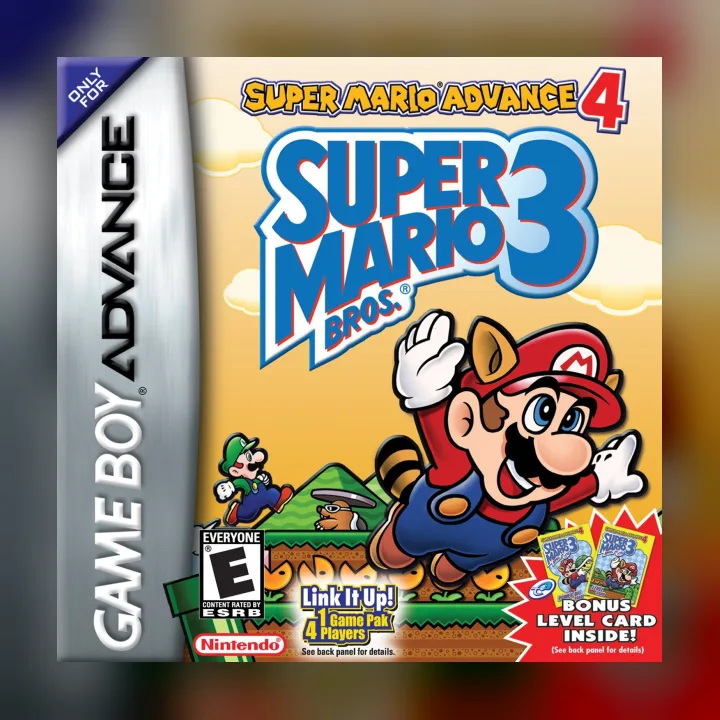
Super Mario Advance 4: Super Mario Bros. 3
2003 · Nintendo · Platform · 1 player
Nintendo Game Boy Advance
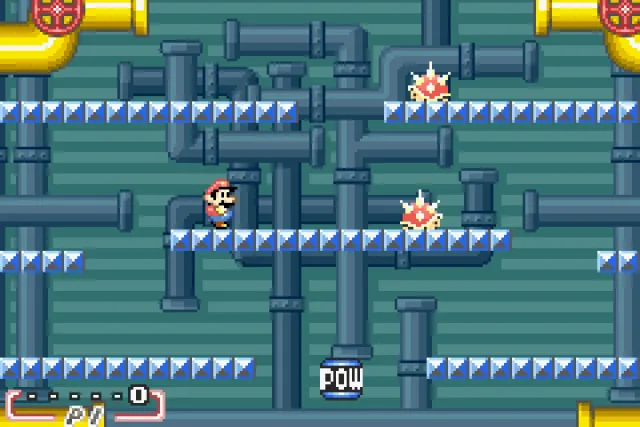
Super Mario Advance 4 brings Super Mario Bros. 3 to the Game Boy Advance, built on the Super Mario All-Stars version. The eight worlds and famous suits are intact, while saving, item handling and a few rough edges were reworked, and a remake of the arcade Mario Bros. comes along as a bonus.
The 2003 Nintendo Game Boy Advance game, free to play in your browser.
Runs in your browser, fullscreen. Keyboard, gamepad and touch controls. Your progress is saved on this device.
About Super Mario Advance 4: Super Mario Bros. 3
Super Mario Bros. 3, rebuilt for the Game Boy Advance
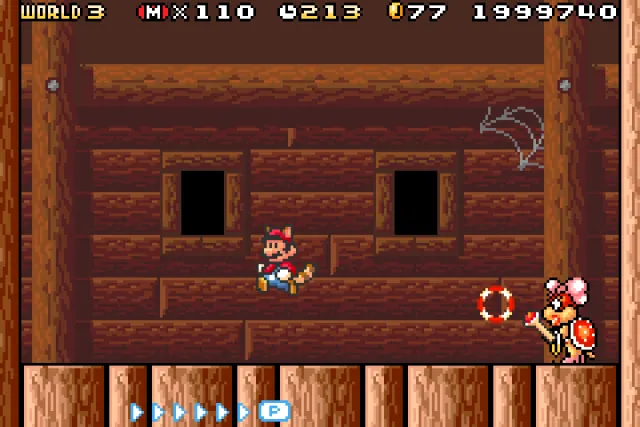
Super Mario Advance 4: Super Mario Bros. 3 is the fourth and final entry in the Super Mario Advance series of remakes. It takes the 1988 NES game and rebuilds it from the 16-bit look of Super Mario All-Stars, so the eight worlds, the overworld maps, the airships and the Koopalings all appear with the richer colours of the Super Nintendo collection, sized for the handheld screen.
The adventure itself is the one players remember. Mario travels from Grass Land to the dark, fortified final world, picking up the Super Leaf for flight, the Frog Suit for swimming, the Tanooki Suit and the Hammer Suit, and saving spare items for tough stages. Toad Houses, mini-fortresses, Hammer Bros. on the map and the card-matching bonus game all return. If you want the original 8-bit release, this site also has Super Mario Bros. 3 for the NES at /super-mario-bros-3.
What changed from the NES and All-Stars versions
Saving is the most practical change. There are three save files, and a quick save from the pause menu lets you stop in the middle of a world; after the game is finished, that save becomes permanent. Progress is also stored after fortresses, airships and certain tank and battleship stages in the last world. Once the game is beaten, a world select screen and a return-to-map option in the pause menu make revisiting stages easier.
Many details changed too. Mario and Luigi have voice clips by Charles Martinet. Items can be carried through pipes, the item stock holds 36 instead of 28, lives go up to 999, and a few enemies and pits were made less punishing. Upside-down Spiny shells can be stomped, Hammer Bros. throw fewer hammers, and the Spade Panel bonus now cycles through suits, with a guaranteed prize on the diamond. Luigi has his own scuttling jump animation but uses Mario’s physics in the main adventure. The two-player battle game of All-Stars was dropped, and the modes are named Mario and Mario & Luigi.
World-e and the European cartridge
In Japan and North America the game worked with the Nintendo e-Reader. Scanning special cards with a second Game Boy Advance could add up to 32 extra stages to a bonus world called World-e, including remakes of Super Mario Bros. levels and new designs, and some cards unlocked switches, power-ups or a version of Luigi with floatier jumps. Four card series were made, and only the first two left Japan.
The e-Reader was never sold in Europe, and on the European cartridge played on this page the feature is switched off even though its menus were translated. Treat this release as the complete main adventure plus the Mario Bros. bonus mode, not as a way to reach World-e. Later releases on the Wii U Virtual Console and Nintendo Switch Online include the e-Reader stages. The Europe cartridge offers English, French, German, Spanish and Italian text.
Release and reception
The game was directed by Hiroyuki Kimura and produced by Takashi Tezuka, with Taiju Suzuki writing the new music. It was revealed at E3 2003 and released in Japan on 11 July 2003, in Europe on 17 October, in North America on 21 October and in Australia on 24 October 2003.
Critics were full of praise. The game holds a Metacritic score of 94 based on 25 reviews, one of the highest for any Game Boy Advance title, and IGN called it the best platformer on the system. It sold more than 2.88 million copies in North America and 718,207 in Japan. This page runs the Super Mario Advance 4: Super Mario Bros. 3 (Europe) cartridge, with keyboard, gamepad or touch controls and saves kept in your browser.
Sources: en.wikipedia.org, mariowiki.com
Screenshots
Game details
- Platform
- Nintendo Game Boy Advance
- Released
- 2003
- Developer
- Nintendo EAD
- Publisher
- Nintendo
- Genre
- Platform
- Players
- 1 player
- Japan release
- 11 July 2003
- Europe release
- 17 October 2003
- North America release
- 21 October 2003
- Australia release
- 24 October 2003
- Publisher
- Nintendo
- Director
- Hiroyuki Kimura
- Producer
- Takashi Tezuka
- Based on
- Super Mario Bros. 3 (NES, 1988) as remade in Super Mario All-Stars
- Metacritic
- 94/100 (25 reviews)
- Version on this page
- Super Mario Advance 4: Super Mario Bros. 3 (Europe), Game Boy Advance cartridge, English, French, German, Spanish and Italian
- Emulator
- mGBA
How to play Super Mario Advance 4: Super Mario Bros. 3
Press Play: the game starts fullscreen in your browser, nothing to install. Press Esc or the ‹ Menu button to come back here; your progress is saved and you can continue next time.
Keyboard
| Arrow keys | Move |
|---|---|
| X, Z, S, A | Action buttons |
| Enter | Start |
| V | Select |
Gamepads (Xbox, PlayStation, Switch and most USB or Bluetooth pads) work as soon as you press a button; two pads give two players. On phones and tablets on-screen buttons appear. Keys can be changed in the emulator's Controls menu.
Super Mario Advance 4: Super Mario Bros. 3 FAQ
Can I play Super Mario Advance 4 in my browser?
Yes. It runs free on this page with keyboard, gamepad or touch controls, and your saves are kept in the browser, so there is nothing to download.
Can I play the World-e e-Reader levels here?
No. The e-Reader was never released in Europe, and the European cartridge on this page has the feature switched off. The extra stages were later included in the Wii U Virtual Console and Nintendo Switch Online releases.
How is it different from the NES Super Mario Bros. 3?
It uses the Super Mario All-Stars graphics, adds voice clips, quick saves, a bigger item stock and a world select after the ending, and softens a few difficult spots. The levels and power-ups are the same.
Does Luigi play differently from Mario?
In the main adventure Luigi has his own jump animation but the same physics as Mario. His floatier jump only appears in World-e or with an e-Reader card.
How many save files does the game have?
Three. You can also quick save from the pause menu, and that save becomes permanent once you have finished the game.
Comments
No comments yet. Be the first!