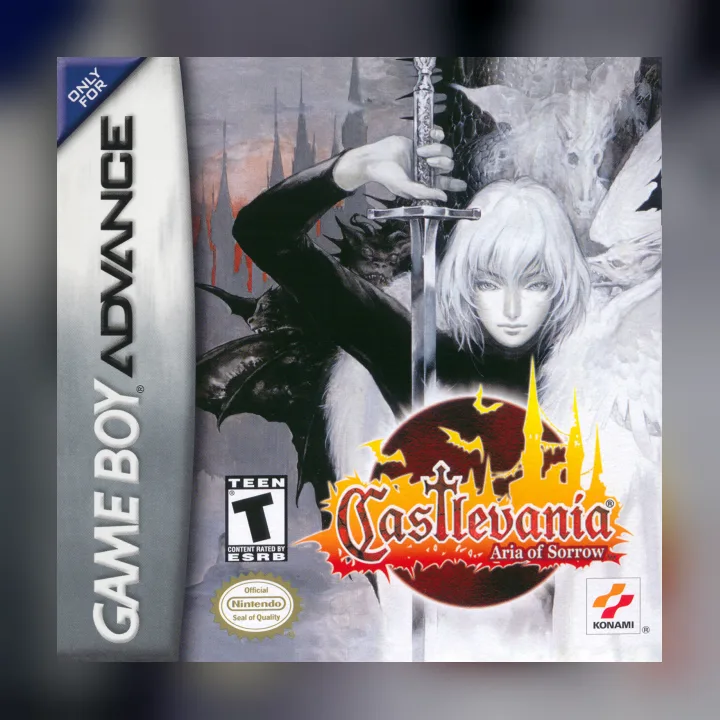
Castlevania: Aria of Sorrow
2003 · Konami · Action, Adventure, Platform · 1 player
Nintendo Game Boy Advance
In 2035 a solar eclipse pulls student Soma Cruz into Dracula’s castle, where he discovers he can absorb the souls of the monsters he defeats. Konami’s 2003 Game Boy Advance adventure, produced by Koji Igarashi, is often ranked among the best games on the system.
The 2003 Nintendo Game Boy Advance game, free to play in your browser.
Runs in your browser, fullscreen. Keyboard, gamepad and touch controls. Your progress is saved on this device.
About Castlevania: Aria of Sorrow
Dracula’s castle in 2035
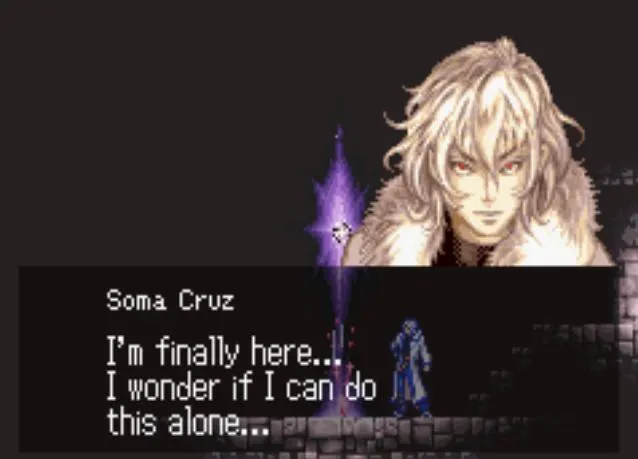
Aria of Sorrow moves the Castlevania series into the future. Its backstory says Dracula was destroyed for good in 1999 and his castle sealed inside a solar eclipse. Decades later, in 2035, Soma Cruz, a transfer student living in Japan, goes to see an eclipse with his childhood friend Mina Hakuba near the Hakuba shrine. The two are pulled into the eclipse and find themselves inside Dracula’s castle.
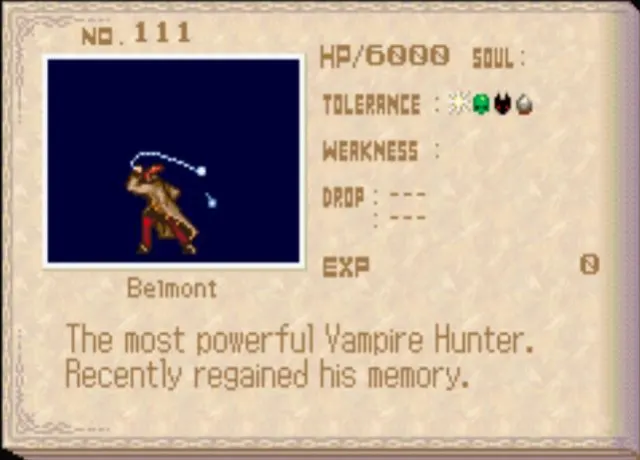
Inside, Soma meets a cast that ties back to the series’ history. Genya Arikado is a mysterious government agent, Yoko Belnades is a witch, and a soldier named Hammer gives up on his mission and opens a shop selling potions, weapons and gear. An amnesiac fighter known only as J turns out to be Julius Belmont. The main rival is Graham Jones, a missionary convinced he is Dracula’s reincarnation. Producer Koji Igarashi said he wanted to take the series down a different route, and Ayami Kojima dressed the characters in modern clothing rather than the medieval look of earlier games.
The Tactical Soul system
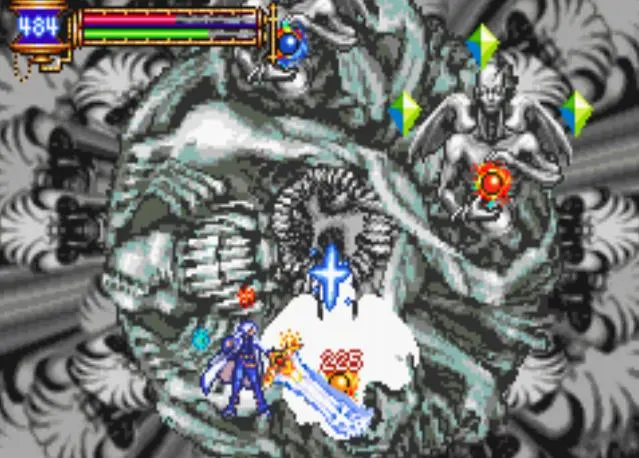
Soma’s special gift is the power to absorb the souls of the monsters he kills. Nearly every enemy can eventually drop a soul of its own, some far more readily than others, and each one grants a different power. Souls come in four types. Red Bullet souls replace the classic sub-weapons and spend magic points on projectile attacks. Blue Guardian souls transform Soma or summon familiars and drain magic while they are active. Yellow Enchant souls stay on while equipped and raise stats or add abilities, such as walking on water. Ability souls come from one-of-a-kind enemies and work all the time without costing magic.
Only one Bullet, one Guardian and one Enchant soul can be equipped at once, so you are always mixing and matching. Konami counts more than 100 abilities in total. Souls can even be traded between two cartridges with a link cable. The castle itself is a side-scrolling labyrinth with RPG-style levelling.
Three endings and Julius Mode
How the story ends depends on what you discover. Defeating Graham without the Flame Demon, Giant Bat and Succubus souls equipped leads to the false ending. With them equipped, the story continues into the Chaotic Realm and a final battle with Chaos; winning gives the true ending, while losing to Chaos ends badly. Beating the game once unlocks a Boss Rush and Julius Mode, where you play as Julius Belmont with his whip instead of Soma. New Game+ and a Hard Mode add more reasons to go back.
This site also has Castlevania II: Simon’s Quest and Castlevania: Bloodlines if you want to compare Aria with earlier chapters of the series.
Development and reception
Aria of Sorrow was developed by Konami Computer Entertainment Tokyo and published by Konami. Junichi Murakami directed it, Koji Igarashi produced and wrote it, Ayami Kojima drew the characters and Michiru Yamane, Takashi Yoshida and Soshiro Hokkai wrote the music. It was released in North America on 6 May 2003, in Japan on 8 May 2003 and in Europe on 9 May 2003, and it was the third and final Castlevania on Game Boy Advance.
It earned a Metacritic score of 91, and Famitsu’s 36 out of 40 was that magazine’s highest score for any Castlevania game. IGN named it the second best Game Boy Advance game of all time in 2007. The Tactical Soul system returned in the 2005 Nintendo DS sequel, Castlevania: Dawn of Sorrow, and Aria was later included in the Castlevania Advance Collection in 2021. This page runs the Castlevania: Aria of Sorrow (Europe) (En,Fr,De) cartridge.
Sources: en.wikipedia.org, konami.com
Screenshots
Game details
- Platform
- Nintendo Game Boy Advance
- Released
- 2003
- Developer
- Konami
- Publisher
- Konami
- Genre
- Action, Adventure, Platform
- Players
- 1 player
- North America release
- 6 May 2003
- Japan release
- 8 May 2003
- Europe release
- 9 May 2003
- Developer
- Konami Computer Entertainment Tokyo
- Publisher
- Konami
- Director
- Junichi Murakami
- Producer and writer
- Koji Igarashi
- Composers
- Michiru Yamane, Takashi Yoshida, Soshiro Hokkai
- Metacritic
- 91/100
- Version on this page
- Castlevania: Aria of Sorrow (Europe) (En,Fr,De), Game Boy Advance cartridge
- Emulator
- mGBA
How to play Castlevania: Aria of Sorrow
Press Play: the game starts fullscreen in your browser, nothing to install. Press Esc or the ‹ Menu button to come back here; your progress is saved and you can continue next time.
Keyboard
| Arrow keys | Move |
|---|---|
| X, Z, S, A | Action buttons |
| Enter | Start |
| V | Select |
Gamepads (Xbox, PlayStation, Switch and most USB or Bluetooth pads) work as soon as you press a button; two pads give two players. On phones and tablets on-screen buttons appear. Keys can be changed in the emulator's Controls menu.
Castlevania: Aria of Sorrow FAQ
Can I play Castlevania: Aria of Sorrow online?
Yes, for free on this page. The Game Boy Advance cartridge runs in your browser with keyboard, gamepad or touch controls, and your saves are kept in the browser.
When does Aria of Sorrow take place?
In 2035, decades after Dracula was destroyed in 1999 and his castle sealed inside a solar eclipse.
How do you get the good ending in Aria of Sorrow?
Equip the Flame Demon, Giant Bat and Succubus souls before defeating Graham, then go on to beat Chaos. Without those souls you get the false ending.
How do you unlock Julius Mode?
Finish the game once. Julius Mode and Boss Rush become available, and in Julius Mode you play as Julius Belmont instead of Soma.
Is there a sequel to Aria of Sorrow?
Yes, Castlevania: Dawn of Sorrow for the Nintendo DS, released in 2005, continues Soma’s story and brings back the Tactical Soul system.
Comments
No comments yet. Be the first!