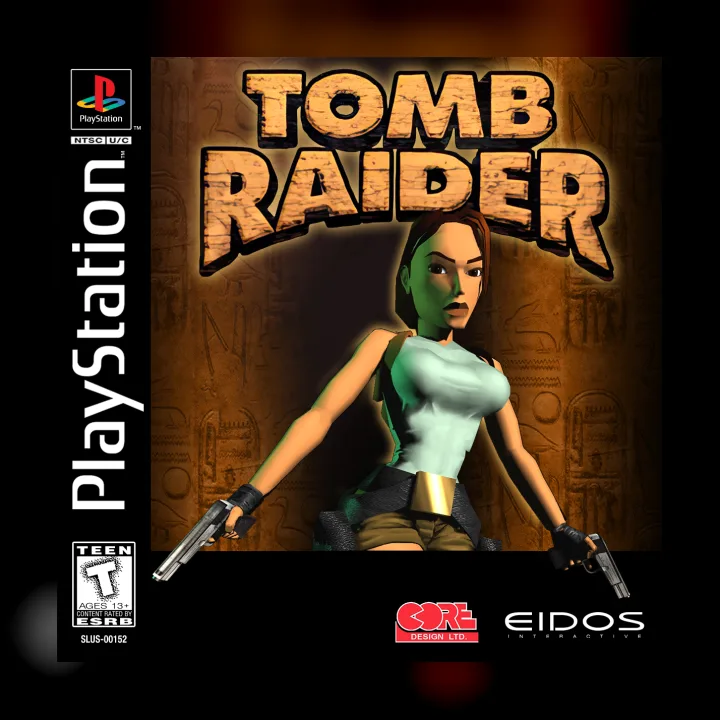
Tomb Raider
1996 · Eidos Interactive · Action, Adventure · 1 player
PlayStation 1
Lara Croft’s first adventure sends her after the three pieces of the Scion, from Andean caves to the ruins of Atlantis – a 1996 PlayStation game that turned 3D exploration and puzzle-solving into a blockbuster.
The 1996 PlayStation 1 game, free to play in your browser.
Runs in your browser, fullscreen. Keyboard, gamepad and touch controls. Your progress is saved on this device.
About Tomb Raider
Hired to find the Scion
Adventurer Lara Croft is hired by the businesswoman Jacqueline Natla to recover an artefact from a tomb in Peru. It turns out to be one piece of the Scion, an object made of three parts, each tied to one of the three rulers of ancient Atlantis. Lara’s search for the rest takes her from Qualopec’s tomb in Peru to Tihocan’s tomb in Greece and the city of Khamoon in Egypt, and finally to Atlantis itself.
Along the way she crosses paths with Natla’s hired mercenary Larson and with Pierre DuPont, a rival treasure hunter after the same pieces, before discovering what Natla really intends: to use the Scion and an army of creatures to force humanity’s evolution forward.
Climbing, swimming and the grid
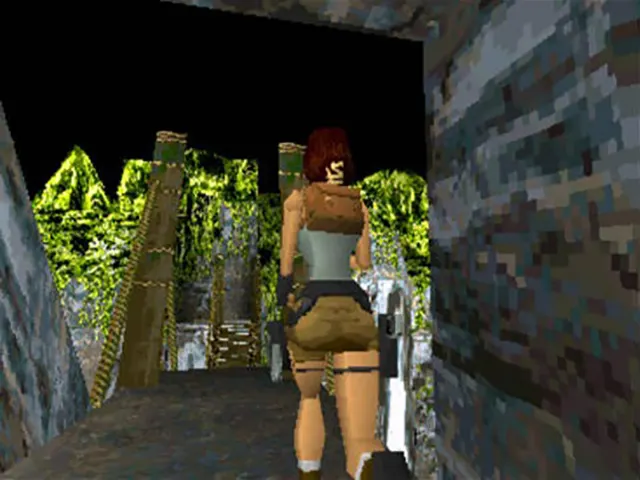
Tomb Raider is played from a third-person camera behind Lara, and its levels are built on a block grid. That structure is what makes the game readable once you get used to it: jumps, ledges and climbs are measured in whole blocks, so a standing jump, a running jump and a grab at the end of a leap each cover a predictable distance.
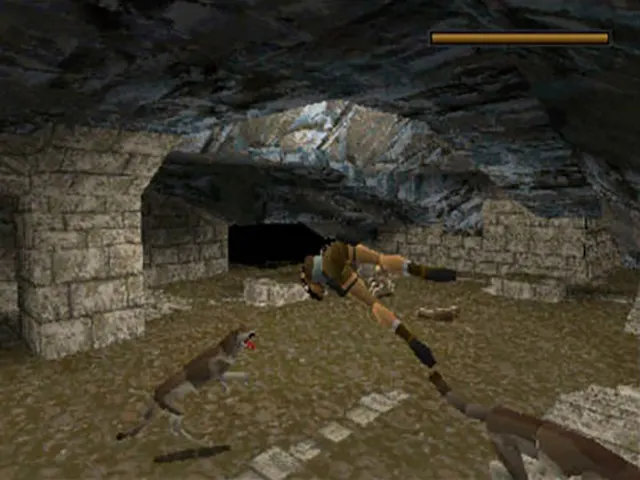
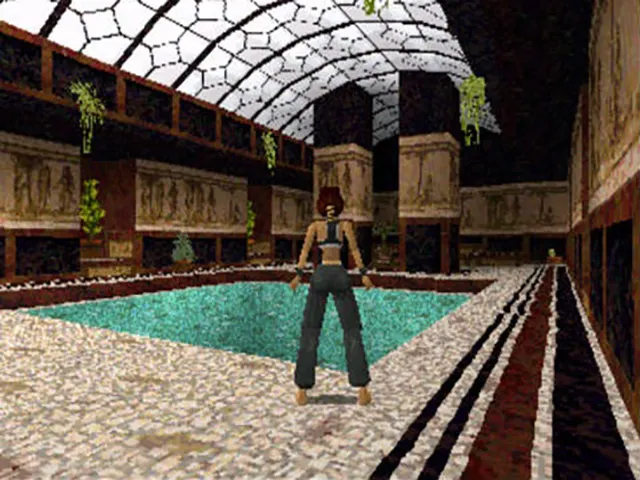
Most of your time is spent exploring rather than fighting. You hang from ledges, swim through flooded chambers, pull levers and push blocks to open doors, and look for keys and artefacts. Combat is handled with Lara’s dual pistols, which never run out of ammunition, plus heavier weapons found later. Most enemies are dangerous animals, deliberately so: the designers used them to ground the world in reality before the stranger, fantastical creatures of Atlantis appear.
There are 15 main levels, from the Caves and the City of Vilcabamba in Peru to St. Francis’ Folly, the Colosseum and Palace Midas in Greece, and on to Natla’s Mines and the Great Pyramid. A separate training level, set in Lara’s home, is available from the menu and is the best place to learn the moves.
Save crystals on PlayStation
The version hosted on this page is the PlayStation original. Unlike the PC release, where you can save at any moment, the PlayStation and Saturn versions only allow saving at Save Crystals placed at set points in each level. That makes long sections tenser, because a mistake can send you back a long way. When you play Tomb Raider in your browser here, your progress is stored on your device, so you can step away and come back later.
From Derby to the world
Tomb Raider was made by Core Design, a studio in Derby, England, and published by Eidos Interactive. Toby Gard came up with the concept and was lead artist; Core’s head Jeremy Heath-Smith gave the project the go-ahead. Development took about 18 months, with a budget of around £440,000, and Nathan McCree composed the music.
The Sega Saturn version arrived first, in Europe on 24 October 1996. The PlayStation and PC versions followed in North America on 14 November 1996 and in Europe on 22 November 1996, and Japan received the PlayStation game, titled Tomb Raiders, on 14 February 1997. It topped the UK charts three times and had sold more than 7 million copies over its lifetime.
Sequels and remakes
Core Design produced five sequels, starting with Tomb Raider II in 1997, and a 1998 expansion called Unfinished Business added four extra levels. The first game was remade as Tomb Raider: Anniversary in 2007, and in February 2024 it was included in Tomb Raider I–III Remastered. The original PlayStation release remains the way the game was first experienced by most players – angular, atmospheric and rather unforgiving.
Sources: en.wikipedia.org, speedrun.com, gamerwalkthroughs.com, retroachievements.org
Screenshots
Game details
- Platform
- PlayStation 1
- Released
- 1996
- Developer
- Core Design
- Publisher
- Eidos Interactive
- Genre
- Action, Adventure
- Players
- 1 player
- PlayStation release (North America)
- 14 November 1996
- PlayStation release (Europe)
- 22 November 1996
- PlayStation release (Japan)
- 14 February 1997, as Tomb Raiders
- Creator / lead artist
- Toby Gard
- Composer
- Nathan McCree
- Budget
- About £440,000; 18 months of development
- Lifetime sales
- More than 7 million copies
- Emulator
- PCSX ReARMed
How to play Tomb Raider
Press Play: the game starts fullscreen in your browser, nothing to install. Press Esc or the ‹ Menu button to come back here; your progress is saved and you can continue next time.
Keyboard
| Arrow keys | Move |
|---|---|
| X | Cross |
| Z | Circle |
| S | Square |
| A | Triangle |
| Q / E | L1 / R1 |
| Tab / R | L2 / R2 |
| Enter | Start |
| V | Select |
Gamepads (Xbox, PlayStation, Switch and most USB or Bluetooth pads) work as soon as you press a button; two pads give two players. On phones and tablets on-screen buttons appear. Keys can be changed in the emulator's Controls menu.
Tomb Raider FAQ
Can I play the original Tomb Raider online?
Yes. Core Design’s 1996 PlayStation original plays free in your browser here. Guide Lara with a keyboard, gamepad or touchscreen, and your progress is saved on this device in place of a memory card.
How many levels does Tomb Raider (1996) have?
There are 15 main levels across Peru, Greece, Egypt and Atlantis, plus a training level set in Lara’s home.
Can you save anywhere in Tomb Raider on PlayStation?
No. The PlayStation version only lets you save at Save Crystals placed in each level; the PC version allows saving anywhere.
Who is the villain in Tomb Raider?
Jacqueline Natla, the businesswoman who hires Lara to find the Scion.
Comments
No comments yet. Be the first!